Showing posts with label Ralph Fiennes. Show all posts

Friday, April 1, 2016

A Bigger Splash

For F*** Magazine

A BIGGER SPLASH

Director : Luca Guadagnino
Cast : Tilda Swinton, Ralph Fiennes, Matthias Schoenaerts, Dakota Johnson
Genre : Crime/Drama/Mystery
Run Time : 125 mins
Opens : 31 March 2016
Rating : M18 (Nudity and Sexual Scenes)

For years, fans have noted an uncanny resemblance between actress Tilda Swinton and the late David Bowie. In this erotic drama, Swinton finally gets to play a rock star, but this is far from a typical paean to the hard and fast living of glamourous rock gods/goddesses. Swinton plays Marianne Lane, a famous singer who is recuperating from surgery on her vocal chords. Marianne and her documentary filmmaker boyfriend Paul (Schoenaerts) are holidaying on the Italian island of Pantelleria. A spanner is thrown in the works of their idyllic getaway by the sudden arrival of music producer Harry (Fiennes), Marianne’s former flame. Harry has his college-aged daughter Penelope (Johnson) in tow. As personalities and egos clash and sexual tensions simmer, our little group isn't going to sit about all quiet-like, with some ugliness bubbling to the surface against the backdrop of some very beautiful scenery.


            A Bigger Splash is a remake of the 1969 French-Italian film La Piscine (The Swimming Pool), starring Alain Delon and Romy Schneider. As odd as this comparison will sound, it might be more helpful to describe the film as a dark take on something like Mamma Mia! A very European frankness with regards to sex and nudity is on full display throughout, and this is a film in which the relationships between the characters are fleshed out via their interactions in various contexts, rather than through clunky exposition. However, this is also a film in which nothing much really occurs, with the bulk of it coming off as Italian tourism board-sponsored scenery porn, and the rest of it is porn in the more traditional sense.


There are farcical and tragic moments, with uneasy tonal shifts that seem intentional if not altogether successful. There is so much lounging and lazing about that when something of actual significance to the plot happens at around the one-and-a-half-hour mark, it feels as if the film has suddenly acquired a focus but does not know what exactly to do with it. During a scene in which Marianne and Harry watch a local woman make traditional ricotta, we hear the migrant crisis in Europe being mentioned via the news on TV in the background. We also hear that boats carrying refugees are stranded off the Pantelleria coast. If director Luca Guadagnino is making some statement about rock star privilege in contrast with the lives of the far less fortunate, said statement is at once on-the-nose and very muddled.


This film marks Swinton’s fourth collaboration with Guadagnino, after The Protagonists, Tilda Swinton: The Love Factory and I Am Love. Swinton’s natural mystique lends itself well to the character of a rock star, and Swinton has stated that Marianne is a mash-up of the afore-mentioned Bowie, Chrissie Hynde and P. J. Harvey. Marianne does not speak throughout the bulk of the film, to avoid straining her vocal chords, and it turns out that this is a character choice on Swinton’s part. The actress made the film shortly after the passing of her mother, and the anguish and loss that she conveys as Marianne are palpable and affecting, even if this is far from the flashiest performance Swinton has given.


The task of chewing up that sun-washed scenery falls to Fiennes, who is at his most comically unrestrained here. It is a fiery, energetic performance, with Fiennes putting it across that Harry’s garrulous, hyperactive nature might be a façade hiding some real brokenness. Fiennes gets to perform a goofy yet mesmerizing dance to the Rolling Stones’ Emotional Rescue and yes, we do get more than a fleeting glimpse of Voldermort’s, uh, wand. The power struggle and competition for Marianne’s affections that exists between Harry and Paul provides the bulk of the film’s tension, with Schoenaerts perfectly serviceable as the “safe”, or “safer”, romantic interest. While Johnson probably won’t want her career to be defined by 50 Shades of Grey, she’s not one to shy away from other risqué material, her Penelope coquettish and aloof. This reviewer thinks the original choice of Margot Robbie might have worked better, though.


Guadagnino had such a good time working on A Bigger Splash that he’s reuniting with the four leads on his upcoming remake of the Italian horror classic Suspiria. There are moments when the film sparks to life, but that only occurs in between long stretches of dilly-dallying across the volcanic island. The talented cast spends most of their time spinning their wheels and this reviewer couldn’t help but be reminded of By the Sea, even though A Bigger Splash is considerably more tolerable than that vanity project. With a setting rife for some deliciously dark goings-on to unfold, A Bigger Splash stirs the pot all too rarely and never comes to the boil.


Summary: Somewhat sexy, somewhat dangerous, beautiful to look at but often pointlessly so, A Bigger Splash’s arthouse-ness overcomes its potential for true intrigue and dark humour.

RATING: 2.5 out of 5 Stars.

Jedd Jong 

Thursday, March 10, 2016

Hail, Caesar!

For F*** Magazine

HAIL, CAESAR!

Director : Joel Coen, Ethan Coen
Cast : Josh Brolin, George Clooney, Alden Ehrenreich, Ralph Fiennes, Jonah Hill, Frances McDormand, Tilda Swinton, Scarlett Johansson, Channing Tatum
Genre : Comedy
Run Time : 106 mins
Opens : 10 March 2016
Rating : PG

The Coen Brothers peel back the curtain on the turning cogs of the ‘50s Hollywood studio system machine in this comedy. Eddie Mannix (Brolin) is a fixer employed by Capitol Pictures, who has to ensure that celebrities’ dirty laundry remains in the hamper. When Baird Whitlock (Clooney), the star of the blockbuster Biblical epic Hail, Caesar!, is abducted, it’s up to Mannix to procure the $100 000 ransom and rescue the actor. Hobie Doyle (Ehrenreich), another one of Mannix’s clients, is a “singing cowboy” actor who is cast in a period drama helmed by prestigious director Laurence Laurentz (Fiennes) in the studio’s attempt to push him as a big star. He is drawn into Mannix’s mission to find Whitlock. Other figures working on the Capitol Pictures soundstages include actress/synchronised swimmer DeeAnna Moran (Johansson) and song-and-dance man Burt Gurney (Tatum), who harbours a dark secret.


            At the time of writing, Hail, Caesar! has an 82% score from film critics but only a 45% audience score on review aggregating site Rotten Tomatoes. The Coens’ tribute to 50s Hollywood is certainly geared towards cinephiles and packs in plenty of nostalgic period detail, with plenty of homages to the tropes and styles of that era’s moviemaking business. There’s a freewheeling frivolity to the film that might alienate those unfamiliar with the historical context in which the Hail, Caesar! is set. There are Easter Eggs and references galore, most of which were lost on this reviewer. In addition to drawing on the films of Old Hollywood, the Coens reference their own back catalogue: the fictional Capitol Pictures studio also featured in Barton Fink.


The Coens have written and directed some startlingly bleak black comedies, and in contrast, Hail, Caesar! is a frothy and frolicsome enterprise. By having the main character be a studio fixer, whose job it is to keep everyone in line and on brand, the Coens have the opportunity to satirise the iron grip the Old Hollywood studio system had on its contract stars. We do get some of that, to be sure, but the film favours silliness over bite at every turn.


            Because of the clout the Coens have built up over their career, they have access to some big names and many of the cast members in Hail, Caesar! are returning Coen Brothers alumni. Eddie Mannix is a fictionalisation of the real-life Hollywood fixer-turned producer of the same name. Brolin captures the character’s strong work ethic and is a reliable straight man of the “comically serious” variety, trudging through the over-the-top shenanigans that occur throughout the film. In O Brother, Where Art Thou?, Intolerable Cruelty and Hail, Caesar!, Clooney plays characters who aren’t too bright, forming the so-called “numbskull trilogy”. Here, Clooney’s Baird Whitlock is modelled after Kirk Douglas; his character in the film-within-a-film being a Roman centurion who is eventually moved by the power of Jesus Christ. Clooney’s lackadaisical charm shines through; Clooney clearly very comfortable working with the Coens.


            A selection of famous faces pop up in extended cameos that could be described as “gratuitous” if one isn’t in a particularly charitable mood – but we’ll be darned if the casting isn’t spot on. Swinton hams it up in a dual role as rival gossip columnists who happen to be twin sisters. Coens oft-collaborator Frances McDormand is a film editor who has a scarf-related mishap and Jonah Hill shows up as a surety agent. Johansson plays an Esther Williams-esque actress and participates in a lavishly choreographed synchronised swimming sequence. Her character is perceived as sweet and elegant, when she’s actually a surly, irascible chain-smoker. Tatum is absolutely hilarious here, while also getting to show off some very fancy footwork in a tap dance number that’s a tribute to Gene Kelly. Ehrenreich may not be as well-known as his co-stars, but he’s plenty likeable as the unrefined singing cowboy who has his life taken over by the studio.


            Hail, Caesar! is plenty of very broadly played fun and is sure to appeal to viewers who have an affinity with the movies of 50s Hollywood and the behind-the-scenes gossip that came with them. Alas, it’s far from the Coens’ sharpest material and there are instances where they seem to be caught up in the minutiae and get a little carried away with their elaborate odes to this bygone era of filmmaking. This can be viewed as something of a companion piece to Trumbo, set against the same political climate in Hollywood but played straight, natch. If it’s nostalgia, whimsy and a couple of intricately staged musical numbers that you’re after, the Coens have got you covered.

Summary: A light-hearted romp through 50s Hollywood, Hail, Caesar! is packed with loving homages but does play a little too “inside baseball” for non-initiates to get into.

RATING: 3.5 out of 5 Stars


Jedd Jong 

Tuesday, November 3, 2015

Spectre

For F*** Magazine

SPECTRE

Director : Sam Mendes
Cast : Daniel Craig, Christoph Waltz, Léa Seydoux, Ben Whishaw, Naomie Harris, Dave Bautista, Monica Bellucci, Ralph Fiennes, Andrew Scott, Rory Kinnear
Genre : Action/Crime
Run Time : 2 hrs 28 mins
Opens : 5 November 2015
Rating : PG13 (Some Violence)

The world’s greatest superspy returns to tackle his most dangerous foe yet in the 24th Bond film. While in Mexico City, James Bond (Craig) discovers the existence of a shadowy terror network known as “Spectre”. Back home, Bond’s boss M (Fiennes) is locked in a power struggle with Max Denbigh aka “C” (Scott), head of the Joint Intelligent Service who aims to abolish the Double-O program. Bond’s allies Q (Whishaw) and Moneypenny (Harris) render their support as Bond pursues Spectre. Through Lucia Sciarra (Bellucci), the widow of a Spectre hitman, Bond finds his way to a figure from his distant past, the sinister Franz Oberhauser (Waltz). Bond must protect Dr. Madeleine Swann, a psychologist with familial links to Spectre who’s working at an exclusive private clinic in the Austrian Alps, from Oberhauser and his hulking henchman Mr. Hinx (Bautista). As the staggering reach of Spectre’s tendrils become apparent, Bond races against the clock to prevent Oberhauser from enacting his devastating schemes. 


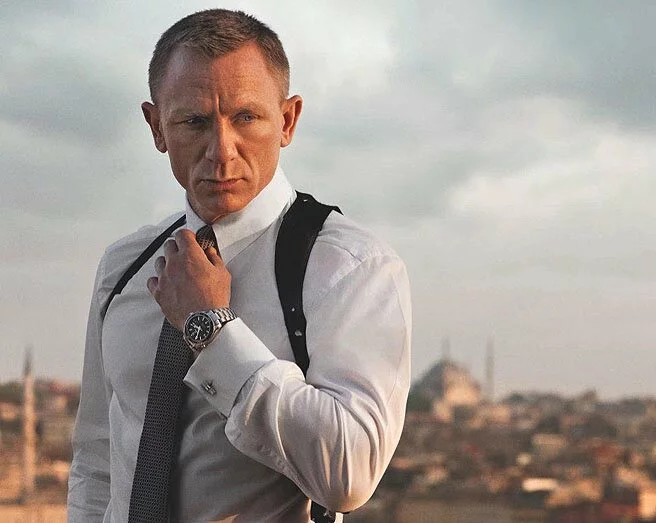
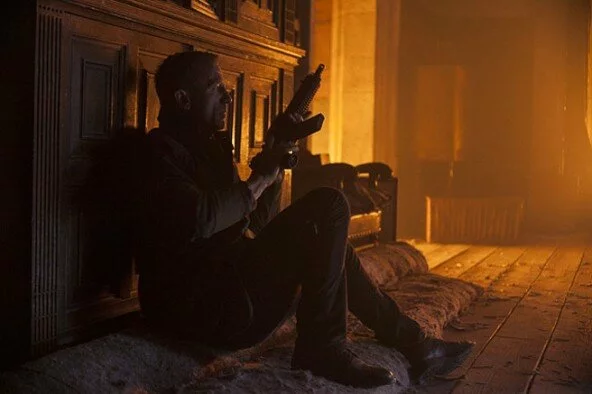
After winning a long legal battle known as the “Thunderball copyright ownership controversy”, the Bond movie producers finally secured the rights to depict the criminal organisation Spectre, integral to the Bond mythos. Fans were excited at the prospect of seeing James Bond come face to face with the éminence grise apparently lurking behind the shadows since the events of 2006’s Casino Royale. Skyfall director Sam Mendes returns for Craig’s fourth outing as 007, and it is evident that he is trying to hit as many mile markers associated with classic Bond as possible. Craig appears in a white tuxedo for the first time, there’s a scene set in a snowy locale, a scary henchman in the Oddjob and Jaws mould and a tricked-out Aston Martin. Sure enough, there are many moments in Spectre that made this reviewer cheer, but alas, after the smoke clears, it seems that the film adds up to less than the sum of its parts. 


On the level of spectacle, Spectre certainly is an accomplishment. Cinematographer Hoyte van Hoytema, succeeding Skyfall’s Roger Deakins, crafts many shots that are striking in their elegant composition and breath-taking in their scope. The film’s pre-title sequence begins with a long tracking shot which follows Bond and his companion Estrella (Stephanie Sigman) through a massive procession as part of the Day of the Dead celebrations in Mexico. Second unit director Alexander Witt and stunt coordinator Gary Powell, both Bond veterans, assist Mendes in assembling major eye candy set pieces including a skirmish to the death aboard a helicopter spinning out of control, a car chase that roars through the streets of Rome and a spectacular plane vs. Land Rover convoy battle in the Austrian Alps – not to mention the single largest explosion ever detonated for a film. This reviewer, along with the majority of Bond fans, doesn’t fully enjoy Writing’s on the Wall, the rather limp theme song performed by Sam Smith. Thankfully, the Daniel Kleinman-designed main titles do enhance its effectiveness. However, there is some imagery that undermines the overall haunting effect of the sequence: expect to hear some tittering from audience members cognisant of Japanese tentacle erotica.


While Craig (in)famously told journalists that he’d rather slit his wrists than play Bond again, he delivers an intense, committed performance, with the character finally getting into the swing of things. As expected, he acquits himself well in the many action sequences and handles the moments of humour better than he did in Skyfall. His portrayal of Bond has sometimes been decried as too self-serious, so it is amusing to see him partake in several well-judged moments of levity that are almost Roger Moore-esque. There is some brooding, to be sure, but Bond gets right in the thick of it and stays there for the duration of the movie. 


Christoph Waltz’s casting was met with much fanfare and speculation as to the true nature of his role. Waltz is fine as Oberhauser, but there’s very little here the Oscar-winner hasn’t done before in other roles and this reviewer was expecting him to have more of an impact. All of the primary villains in the Craig-starring Bond movies have been creepy European dudes, and Oberhauser is no exception. The Spectre meeting at an Italian palace, designed to evoke an arcane secret society ritual, is a genuine nail-biter of a scene and is marvellously acted by Waltz. However, when Oberhauser states his motivation, it is disappointingly contrived given all the build-up, since he’s been positioned as this ultimate baddie. Even though there’s obviously more to the character than is told to us in Spectre, the feeling of “wait, that’s it?” is pretty hard to shake. 


Seydoux’s turn as the lead Bond girl is understatedly affecting, even if the character isn’t one of the more memorable women in the Bond canon. With Madeleine Swann, screenwriters John Logan, Neal Purvis, Robert Wade and Jez Butterworth are aiming for a character who isn’t either extreme of “fragile wallflower” or “kicker of ass who can give Bond a run for his money”. Even then, the arc in which she is initially sceptical of and almost hostile towards Bond but eventually warms to his charms is very predictable. It is a wonder that the sultry, glamourous Bellucci hasn’t been in a Bond film until now, so it is even more of a let-down that she is criminally underused in an all-too-brief appearance. The Lucia Sciarra character is also little more than the “kept woman” archetype we’ve seen many times throughout the Bond films, from Domino Derval to Solitaire to Andrea Anders. 


The support system of Bond’s allies M, Moneypenny, Q and Bill Tanner (Rory Kinnear) is integrated into the plot instead of coming off as ancillary, which is to Spectre’s credit. The crisis at MI6, secondary compared to Bond’s tangle with Spectre but still pretty serious stuff, is rooted in topical security concerns, with C planning an invasive universal surveillance program. Whishaw gets several humorous moments and Q does go out into the field in this one, but it isn’t taken too far (see Octopussy). Scott, best-known for playing the dastardly Moriarty in BBC’s Sherlock, is far more restrained here, which means the character is believable but often dull. Bautista as the silent, musclebound Hinx is excellent casting. Henchmen with silly gimmicks are one of the most often-parodied elements of Bond films, so it’s commendable that Bautista manages to hark back to that without taking one out of the movie by being silly. 


This reviewer found Spectre agonising, not because it’s a bad film – not by a long, long shot – but because of how unsatisfying it is once one takes a step back. There are a few references to Bond films past that cross the line from “cute” to “smug”. In the moment, it is entertaining and thrilling and there are action sequences which stand up to the most memorable in the series, but the overarching plot, especially where it pertains to the villain, leaves a fair amount to be desired. For a film that hits so many high points, true, sublime greatness remains out of Spectre’s grasp. 

Summary: There are thrills and instantly classic scenes galore, but on peeling back the layers of Spectre, it isn’t quite the ghost with the most. 

RATING: 3.5 out of 5 Stars 

Jedd Jong 

Tuesday, October 30, 2012

Skyfall

For F*** Magazine, Singapore


SKYFALL

2012
Starring: Daniel Craig, Javier Bardem, Judi Dench, Ralph Fiennes, Naomie Harris

Directed by: Sam Mendes

Following MGM’s filing for Chapter 11 bankruptcy in 2010, it seemed that the sky really was falling for Bond fans everywhere. The future of the film franchise was put in jeopardy, and, for a while, it was a very strong possibility that Quantum of Solace would be the last James Bond film ever — which, for many, would have been disappointing to say the least. Thank goodness that Bond’s future seems brighter than ever with this triumphant 50thanniversary celebration.


The film opens in Istanbul, where Bond (Craig) is thrust right into the frenzied pursuit of Patrice (Ola Rapace), a French mercenary who has stolen a hard drive containing a list of NATO undercover agents embedded in terrorist cells. Bond is assisted by field agent Eve (Harris), and the mission goes awry. The repercussions make themselves felt: the names are leaked in a YouTube video, M (Dench) comes under pressure from Gareth Mallory (Fiennes), chairman of the Intelligence and Security Committee, to call it quits, and MI6 falls victim to a vicious cyberterror attack. Bond follows a lead and tracks Patrice down to Shanghai, where he tangles with the mercenary in a high-rise skirmish. He also glimpses the enigmatic and beautiful Sévérine (Bérénice Marlohe), whom he meets again at a lavish floating casino in Macau. Bond asks to be taken to the woman’s employer, thus encountering the villain of the piece, Raoul Silva (Bardem). Silva is a flamboyant, psychopathic figure who bears quite the grudge against M, and perpetrated the attack on MI6 headquarters. Bond realizes that this mission is far more personal than it first appears — and perhaps just as much for M as it is for him.


In Skyfall, Bond is asked what his hobby is. “Resurrection” is his reply — and this is resurrection of the most glorious kind. Skyfall sets right many perceived problems viewers had with the previous installment. This being the 23rd official Bond film, some might say he’s a little long in the tooth, but Skyfall examines and proves the character’s relevance. With Oscar-winning director Sam Mendes at the helm, this is a very stylish, good-looking film; nine-time Oscar nominated cinematographer Roger Deakins serves up startlingly gorgeous imagery. Adele’s theme song is many times better than the Jack White/Alicia Keys trainwreck “Another Way to Die,” and it plays over Daniel Kleinman-designed opening credits that make strong reference to plot points throughout the film, instead of serving as a mere light show. Many wrote off the first two Daniel Craig-starring Bond films, Quantum in particular, as vainly aping the Bourne movies. Well, that’s definitely no longer the case (even though Bourne alumnus Albert Finney is in this too), as Skyfall’s tone strikes a near-perfect balance between the tough and gritty and glamorous and smooth, with a strong emotional current running through it all.


Daniel Craig is back in the saddle, the days of fans crying foul over his casting as the iconic character well and truly behind him. There’s a moment in the opening action sequence that’s in the trailers: Bond uses an excavator to tear the roof of a train carriage open, climbs on the excavator’s arm, leaps into the train and adjusts his cufflinks after he lands. That pretty much sums up Bond’s characterization: he’s willing to get his hands dirty and is rather brash, but at the same time is growing into the slick, suave agent he should be. This film also does something traditionally considered rather taboo in Bond films — delving into the character’s past, and it does so pretty well.  Many Bond films struggle with fitting M into their stories. Well, one could go so far as to say Skyfall is really M’s story, with Bond happening to become embroiled in it. Judi Dench is better than ever as the character; a woman hardened by years in a particularly challenging line of work, and someone who has to reconcile personal sentiments with duty. Also at MI6 is Ben Whishaw as the new incarnation of Q, Bond’s quartermaster, and, traditionally, the curmudgeon who begrudgingly hands out his gadgets to him. While former Qs John Cleese and, before him, the late Desmond Llewelyn were slightly older gentlemen, Skyfall runs in the opposite direction with a rather young, “adorkable” Q, whom Bond almost immediately writes off because of his youth. Whishaw and Craig share remarkable chemistry, and it would be a sin not to have this Q continue to appear in future Bond movies. The ever-dependable Ralph Fiennes ties it all together as the meddling bureaucrat who might not be that big of a jerk after all. This film also does something traditionally considered rather taboo in Bond films, delving into the Bond character’s past — and it does so pretty well.


So, how about the Bond villain and the Bond girls? Oscar-winner Javier Bardem puts in a spine-chilling performance as Silva, the villain. He’s proven he can play unhinged in No Country for Old Men, but Silva is a psycho of a different stripe. Bardem’s over-the-top portrayal is sometimes comic and harks back to villains of old. Silva is something of an impetuous child, but behind the loudness and the posturing lays a bitter, broken soul. Not every actor can convincingly inhabit a character of this sort. Naomie Harris has a nicely playful chemistry with Daniel Craig; Eve and Bond’s mutual flirtation providing much respite from the rather intense proceedings. Bérénice Marlohe makes for a stunning, exotic Bond girl and gets to share a scintillating shower scene with 007 himself. However, this isn’t a Bond film that will be primarily remembered for its women.


What it will be remembered for is its ending, a showdown which I’ve been kindly told not to spoil. If there’s one “issue” with the film, one which is reinforced by the ending, it’s that this is clearly a movie best enjoyed by Bond aficionados. It’s less action-driven than one might expect a modern-day Bond film might to be, and is a love letter to Bond in commemoration of his 50 years onscreen. As such, more casual viewers might feel just a teeny bit left out. It doesn’t attempt to chuck out everything the older Bond movies are remembered for; instead teasing some of those elements and building upon them. The Aston Martin DB5 from Goldfinger appears, complete with the same license plate and all the frills from that film — a symbol of the healthy nostalgia Skyfall possesses. By the movie’s end, it seems as if the Daniel Craig-starring Bond movies have found their footing at last, having incorporated more classic motifs into their framework – and fans can toast their martinis to Bond’s sterling return.

SUMMARYSkyfall is a Bond film that’s worth the wait, one that’s worthy of marking Bond’s golden anniversary, and one that Bond devotees will welcome with open arms. Here’s to 50 more years at the movies, 007!

RATING: 4.5 out of STARS

Jedd Jong