Showing posts with label Jason Clarke. Show all posts

Wednesday, September 23, 2015

Everest

For F*** Magazine

EVEREST

Director : Baltasar Kormákur
Cast : Jason Clarke, Jake Gyllenhaal, John Hawkes, Josh Brolin, Keira Knightley, Robin Wright, Sam Worthington, Emily Watson, Martin Henderson
Genre : Adventure/Thriller
Run Time : 122 mins
Opens : 24 September 2015
Rating : PG (Some Intense Sequences)
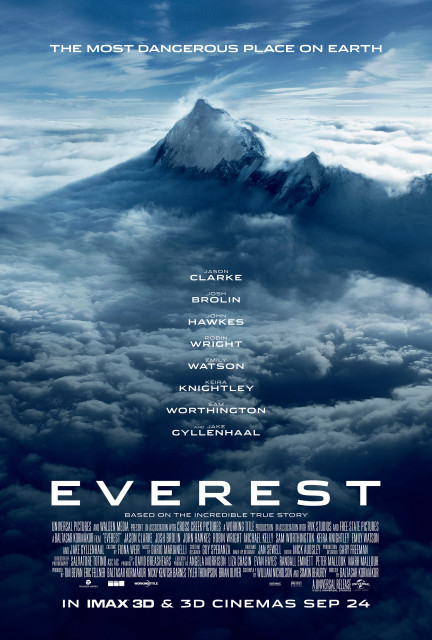
There is a Chinese proverb that warns of the dangers of the oceans, which roughly translates to “bully the mountain but never bully the water”. It turns out that mountains aren’t to be trifled with either. It is 1996 and Rob Hall (Clarke), founder of expedition guide agency Adventure Consultants, is leading a group of climbers up Mount Everest. His clients for this season include Doug Hansen (Hawkes), a mailman who has made two failed attempts to ascend Everest; Beck Weathers (Brolin), a Texan doctor; Yasuko Namba (Naoko Mori), a Japanese woman who has climbed six of the world’s seven tallest peaks and is hoping to complete that list by reaching the top of Everest; and journalist Jon Krakauer (Kelly). Rob’s wife Jan (Knightley) is pregnant with their first child and is awaiting his safe return. It is a crowded climbing season at Everest base camp, with expeditions from various countries and Scott Fischer (Gyllenhaal), founder of the rival expedition agency Mountain Madness, also with their eyes on the prize. When disaster strikes at the roof of the world, every last ounce of determination and endurance will be required to stay alive in the most inhospitable of conditions. 


The 1996 Mount Everest disaster is a well-documented tragedy, covered by multiple books, documentaries and a TV movie. Jon Krakauer’s book Into Thin Air is probably the best-known account, though some have called the veracity of his version of events into question. The poster claims Everest is “the most dangerous place on earth”, though mountains like Annapurna, K2 and the Eiger have claimed a larger ratio of lives. Still, that’s not to diminish the obvious risk inherent in climbing Everest. Director Baltasar Kormákur is clearly striving for a depiction that is as accurate, objective and respectful as possible, lending the movie the vibe of a National Geographic docu-drama re-enactment, but with a much larger budget and better actors. Movies allow audiences a glimpse into worlds they would never step into otherwise, and Everest achieves a sufficient degree of authenticity, thanks to location shooting in Italy’s Ötztal Alps, Iceland and Nepal itself. This is a film that was made for the IMAX 3D format and while there is an actual IMAX 3D Everest documentary, this film offers a more immersive and thrilling experience because of its narrative. 


The movie makes it crystal clear that ascending Mount Everest is a behemoth undertaking, involving training and acclimatisation, complex logistics, the harshest of elements and coming at a high monetary cost as well. The screenplay, credited to Simon Beaufoy and William Nicholson, tidily explains the rules and technicalities in layman’s terms while not dropping exposition into the audience’s lap wholesale. The film, via Michael Kelly’s portrayal of Krakauer, directly addresses the question most viewers would have on their minds – “why climb Everest at all?” The famous words of pioneering mountaineer George Mallory, “because it’s there”, are invoked, but the answer – if there is a singular one - seems far more ineffable and we are able to see just how much conquering the famous peak means to the various people in the story. 


Everest boasts an impressive cast by any standards, so there is the danger of it becoming “famous people on a mountain” and losing the verisimilitude of the true story. Thankfully, this is largely averted. Jason Clarke is excellent, portraying Rob Hall as diligent and attentive, while also aiming to turn a profit/make a living. Josh Brolin’s rugged charm is on full display, but it is John Hawkes who turns out to be the emotional core of the film. Hawkes’ portrayal of Doug, whose passion for mountaineering has rendered him near-penniless and has driven a wedge in his relationship with his wife and family, is quietly, painfully sympathetic. Jake Gyllenhaal’s Scott Fischer is the laid-back, free-spirited counterpoint to the by-the-book Rob, and the film benefits from never sensationalising the rivalry to cartoony proportions. 


We do wish Naoko Mori’s Yasuko Namba got more screen time – this is a woman who has successfully conquered six of the seven tallest mountains in the world by the age of 47, and is clearly a fascinating person. However, we concede that giving everyone their moment to shine in an ensemble picture is tricky, let alone when set against the staggering backdrop of a mountaineering disaster. The film also falls back on the “anxious wife back home” cliché, with Keira Knightley and Robin Wright as Rob’s wife Jan and Beck’s wife Peach respectively. The fact that Jan was pregnant at the time might come off as emotionally manipulative – but then again, that is what actually took place and while it’s a formula we’ve seen many times before, we can’t think of a viable alternative to portray what the climbers’ families were going through. 


While there is not a huge amount of room to establish the climbers as fully-developed characters, they are several notches up from being faceless victims and it easy to get invested in their plight. There are certain points where it might be difficult to tell the characters apart, since they are all clad in heavy-duty winter gear, are wearing goggles and mostly bearded. 


Many films are pitched as “celebrating the triumph of the human spirit”. There is an element of that in Everest, to be sure, but it is tempered with the idea of Mother Nature as a harsh mistress. As the line in the film goes, “the last word always belongs to the mountain.” There’s no sugar-coating, no manufactured “Hollywood ending”, with the conclusion bittersweet in that it’s 80% bitter and 20% sweet. Everest gets off to a slow start and because the tragedy it’s based on was so well-publicised, many viewers will know how it ends, but this is a journey that is largely worth the while. 


Summary: A respectful, credible account of the 1996 Everest disaster that overcomes the bits of survival drama formula it must include with some terrific performances and harrowing spectacle. 

RATING: 3.5 out of 5 Stars

Jedd Jong 

Wednesday, June 24, 2015

Terminator Genisys

For F*** Magazine

TERMINATOR GENISYS

Director : Alan Taylor
Cast : Arnold Schwarzenegger, Jason Clarke, Emilia Clarke, Jai Courtney, J. K. Simmons, Dayo Okeniyi, Matthew Smith, Courtney B. Vance, Lee Byung-Hun 
Genre : Sci-Fi/Action
Run Time : 126 mins
Opens : 25 June 2015
Rating : PG13 (Violence & Brief Coarse Language)

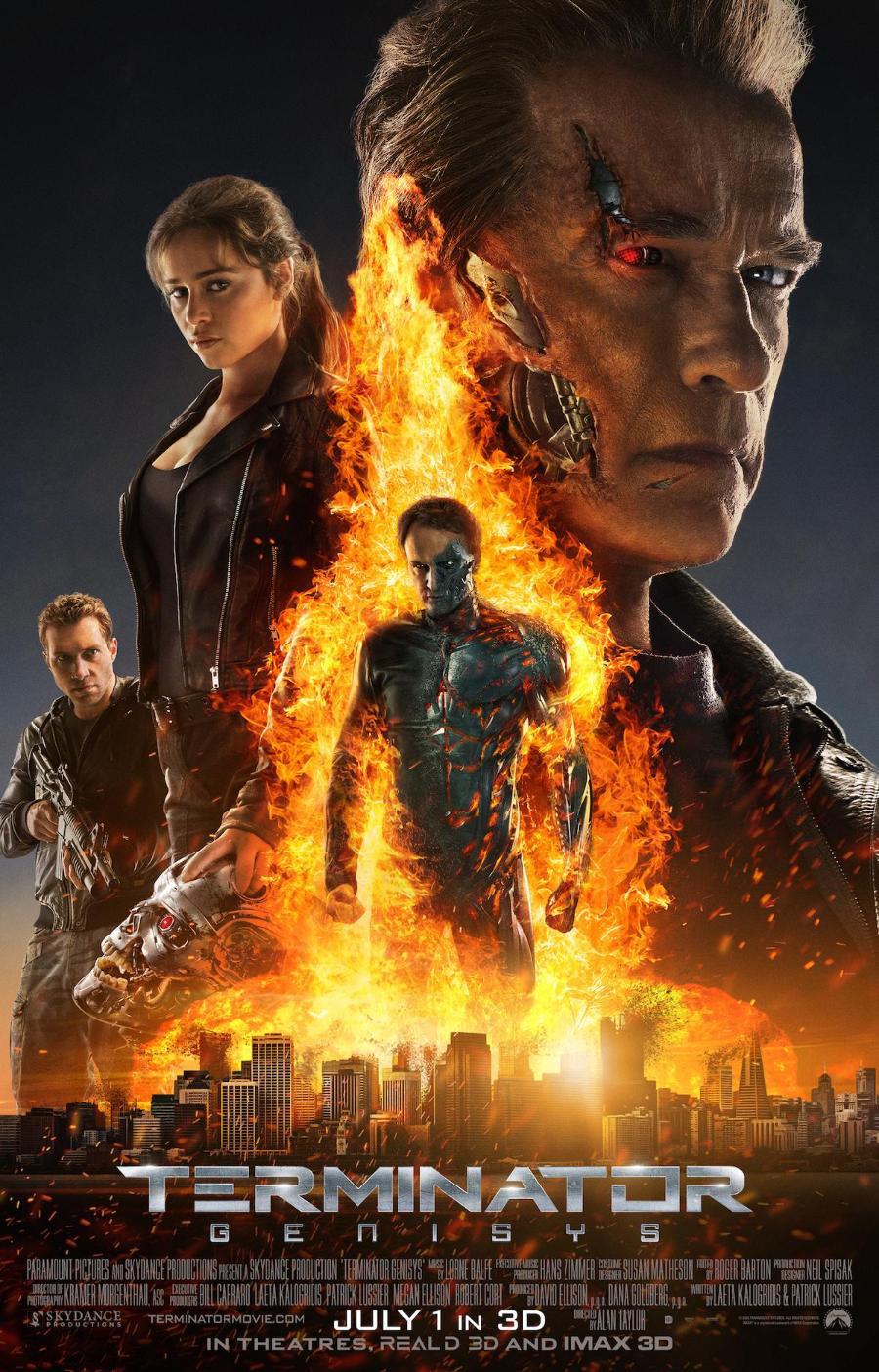
“There is no fate but what we make” – the filmmakers behind the fifth entry in the Terminator film series hope to rewrite its fate, after the third and fourth films left most critics and moviegoers cold. Sci-fi fans know the drill – artificially intelligent network Skynet has taken over the world, killing most of earth’s population in the apocalyptic “Judgement Day”. In the future, John Connor (Jason Clarke) leads the resistance against the machines. In this reboot, John sends his trusted lieutenant Kyle Reese (Courtney) back in time from 2029 to 1984 to save John’s mother Sarah (Emilia Clarke) from the T-800 Terminator (Schwarzenegger/Brett Azar/Aaron V. Williamson). Kyle arrives in the past to discover he has entered an alternate timeline where Sarah Connor already knows her destiny and has been watched over by an aging T-800 she has nicknamed “Pops” (also Schwarzenegger). Forced to team up with Sarah and Pops, Kyle has to figure out what this means for the future as Skynet takes on a new form; the universal connectivity app “Genisys”.


            2015 has already seen the release of new Mad Max and Jurassic Park films, with the seventh Star Wars movie due in December. We won’t be griping about the prevalence of sequels and reboots, because those can be good – it seems the problem isn’t so much that Hollywood has run out of ideas but that studio executives are banking too much on brand recognition and the built-in audience a pre-existing intellectual property brings with it. Terminator Genisys is caught in a paradox: one won’t be able to fully grasp its place in the larger Terminator mythos without having seen the earlier films, but if one holds the first two movies very dear, it’s likely to be a considerable disappointment. The “alternate timeline” route, not unlike with the 2009 Star Trek reboot, seems like a reasonable premise for a series built on time travel. However, the directions that Laeta Kalogridis and Patrick Lussier’s screenplay takes this in often feel like desperate attempts to stretch out a series that should have ended with 1991’s T2 (or at least the theme park attraction T2: 3D Battle Across Time). Judgement Day is postponed - again - and our protagonists have to stop this new Judgement Day from happening – again.


            The film is comparable to a greatest hits album as sung by a cover band – it’s trying its darndest to add something to the existing material but often feels perfunctory in having to hit those certain iconic waypoints along the way. Genisys actually does a fine job of setting up its fairly convoluted back-story in its opening minutes – we’re told in relatively concise fashion what Skynet is, what happened on Judgement Day, who John Connor is, why Kyle Reese needs to be sent back in time and what the scope of the threat is. Even then, more than a passing familiarity with T1 and 2 is needed for all of it to make proper sense. There’s also the matter of the spectacle – sure, there are plenty of action set pieces and there is some cool new imagery, particularly during a scene involving a MRI scanner, but none of it is truly awe-inspiring or unique. The first two Terminator films, T2 in particular, broke a lot of ground in the realm of special and visual effects and packed in jaw-dropping moments that still hold up today. There is a marked over-reliance on computer-generated imagery and yes, while this is a series about robots, it all feels too synthetic. There’s a helicopter chase that looks entirely like it belongs in a video game and the T-1000’s (Lee) liquid metal effects are on about the same level as those in T2 24 years ago.


            Arnold Schwarzenegger’s return to the iconic role of the T-800 does lend some legitimacy to the enterprise but we’re sure some fans will find it difficult to accept that the lethal killing machine is now relegated to a softer father figure and often functions as the comic relief. Schwarzenegger still possesses the chops to pull off the action beats and is still a believable badass. However, we don’t get anything half as heart-rending as the bond between the T-800 and a young John Connor in T2, even when the Terminator is supposed to have practically raised Sarah since she was a little girl. At times, this reviewer felt like he was watching a lavishly-produced fan film that had managed to snag an actor from the original show, akin to how Walter Koenig, Nichelle Nichols and George Takei sometimes make appearances in Star Trek fan productions.


            What makes it all the more difficult for this to be accepted as a proper Terminator continuation is that while Arnie is a recognisable holdover from the earlier films, all the other re-imagined characters look and feel so different than how we know them. Emilia Clarke goes from being the Mother of Dragons to the mother of humanity’s last hope. She is miscast as Sarah Connor, largely unconvincing as a badass woman who has spent most of her life under the tutelage of a purpose-built killing machine. When compared to how intense Linda Hamilton was in the role, Emilia Clarke seems like she’s merely playing dress-up, whiny rather than burdened with the fate of the human race.


            Jai Courtney looks and acts nothing like Michael Biehn, making him another puzzling casting choice. Where Biehn’s Kyle Reese was a sensitive, scarred but romantic figure, Courtney is more brutish. When Kyle and Sarah get into arguments, as they often do throughout the film, it feels awfully petty instead of carrying the weight of life and death. While undoubtedly a central figure to the mythos, John Connor has never really been the most interesting character of the series. Jason Clarke is fine in the role and the major plot twist in the film (which was spoiled in the trailers and the poster) does add an interesting layer to the character, but purists will probably find it sacrilegious. Lee Byung-hun does little more than run fast and look menacing as the shape-shifting T-1000 and J. K. Simmons is entirely wasted in a throwaway bit part as the lone police officer who believes Sarah and Kyle’s far-fetched story. Doctor Who’s Matt Smith also pops up in a small but crucial role.


            As a standalone sci-fi action film, Terminator: Genisys has its entertaining moments and isn’t as confusing in presenting its alternate timeline plot as it could’ve been. However, it’s impossible to pretend that this film doesn’t come with more than its share of baggage and doesn’t have a towering legacy to live up to. In riffing on what James Cameron had created with the first two Terminator films, Terminator Genisys director Alan Taylor has delivered a pale imitation of a sci-fi icon, an also-rans at best. Stick around for a mid-credits sequel-bait scene.


Summary: There is effort put into Terminator Genisys, but this attempt at continuing the franchise can’t help but feel it exists just for the sake of existing and is likely to alienate long-time fans of the series.

RATING: 2.5 out of 5 Stars

Jedd Jong 

Wednesday, July 9, 2014

Dawn of the Planet of the Apes

For F*** Magazine

DAWN OF THE PLANET OF THE APES

Director : Matt Reeves
Cast : Andy Serkis, Jason Clarke, Gary Oldman, Keri Russell, Toby Kebbell, Judy Greer, Kodi Smit-McPhee, Kirk Acevedo, Nick Thurston, Terry Notary
Genre : Sci-Fi, Action
Opens : 10 July 2014
Rating : TBA 
Running time: 132 mins

Three years on from the release of Rise of the Planet of the Apes, this reviewer is still impressed with how effective, intelligent, innovative and just plain good that reboot was. In this sequel, set ten years after the events of Rise, earth’s human population has dwindled at an alarming rate in the wake of a devastating “Simian flu” pandemic. Caesar the chimpanzee (Serkis) leads a flourishing shrewdness of apes, including his son Blue Eyes (Thurston) and his aggressive advisor Koba (Kebbell). The human remnant sequestered in what remains of San Francisco is headed by military man Dreyfus (Oldman). Malcolm (Clarke), one of the survivors in Dreyfus’ camp, forges a fragile alliance with Caesar in order to gain access to a hydroelectric dam to generate power for the human settlement. Caesar grows to accept Malcolm, his wife Ellie (Russell) and their son Alexander (Smit-McPhee). However, having been severely mistreated by humans while in captivity, Koba strongly disapproves of this arrangement and incites an explosive conflict between the apes and the humans.


            Dawn of the Planet of the Apes sees Matt Reeves of Cloverfield fame taking over the director’s chair from Rupert Wyatt, working from a screenplay by Rise scribes Rick Jaffa and Amanda Silver, with Mark Bomback. This is everything a good sequel should be, furthering the plot in a logical and intriguing direction without slavishly re-treading the story beats of its predecessor and without trying to be superficially “bigger and better” in terms of bombastic spectacle. Equal storytelling attention is given to the apes and the humans and the audience is fully able to buy into this world and accept each player in this story, be they human or computer-generated ape, as legitimate, well-formed characters. There’s a whole lot of meaningful character development going on and admirably enough, much of the conflict is derived from the characters’ individual nature instead of contrived circumstances. Despite the ten year time skip, there is still very strong connective tissue linking Dawn to Rise, building on the emotions generated from Caesar’s early years as depicted in the previous film.  


            Of course, credit has to be given to visual effects supervisor Joe Letteri of Weta Digital. The many artists and technicians involved give vivid life to the performance capture work of actors like Andy Serkis and Toby Kebbell, applying their expressions and physicality to intricately-crafted CGI apes. The interaction between the apes amongst themselves, the apes and the environment and the apes and the live-action human actors is seamless. As impressive as the animation in Rise of the Planet of the Apes was, it is stepped up here, to the point that the film’s opening shot is a tight close-up of Caesar’s eyes – those eyes lifelike and actually acting. Serkis, Kebbell, Thurston and the other actors portraying the key apes all deserve praise for essaying these figures with such nuanced physicality, but the visual effects wizards carrying that baton to the finish line should be duly recognised as well. In Dawn, great acting and great effects go hand-in-paw to create not just creatures, but honest-to-goodness characters.


            The human cast is our way in, and Jason Clarke, Keri Russell and Kodi Smit-McPhee are all convincing as the members of the family central to the story. The terseness between Malcolm and Caesar that eventually gives way to mutual respect and understanding but is always threatened by both apes and humans is played exceedingly well by both Clarke and Serkis. Gary Oldman’s role is not as big as the promotional material would have you believe, but he brings a heart-wrenching humanity to Dreyfus in addition to his signature explosive scenery-chewing (delivered in just the right amounts).


            1968’s Planet of the Apes was a landmark achievement for being an entertaining film that also pushed the boundaries of filmmaking technique (particularly in terms of special effects makeup) and was very thought-provoking. Dawn of the Planet of the Apes is commendably similar in all those regards. There’s always been a silliness inherent in the premise, but following Rise, Dawn continues to effectively mitigate that. The film is unflinchingly brutal, even disturbing when it has to be but also articulates genuine emotion. It can be construed as anti-gun, interesting considering that the star of the original Planet of the Apes, the late Charlton Heston, was the president of the National Rifle Association. However, that is not where the focus lies – Dawn of the Planet of the Apes, like Rise before it, is a true character piece. Many summer blockbusters are touted as “character pieces” and that fools no one, but here is a film that intelligently and compellingly comments on prejudice and war while delivering the action flick goods and visual effects spectacle. A fine antidote to Transformers: Age of Extinction.


Summary: A new day is dawning, as the revitalised Planet of the Apes franchise marches onwards in just the right direction.

RATING: 4.5 out of 5 Stars

Jedd Jong 

Friday, June 28, 2013

White House Down

For F*** Magazine

WHITE HOUSE DOWN

Director: Roland Emmerich
Cast: Channing Tatum, Jamie Foxx, Maggie Gyllenhaal, Joey King, Rachelle Lefevre, James Woods, Richard Jenkins, Jason Clarke, Jake Weber, Garcelle Beauvais, Michael Murphy
Genre: Action, Thriller
Run Time: 132 mins
Opens: 27 June 2013
Rating: PG13 (Some Coarse Language and Violence)

After taking a short detour into the realm of speculative costume drama with 2011’s Anonymous, director Roland Emmerich is back to doing what he does best: dealing out copious amounts of punishment to 1600 Penn. After all, he blew it to smithereens with an alien death ray in Independence Day and smashed an aircraft carrier into its south portico in 2012. It seems inevitable that the maven of large-scale cinematic destruction would eventually make a film centering on the D.C. Landmark.

U.S. Capitol Police Officer John Cale (Tatum), with his daughter Emily (King) in tow, heads to the White House for a job interview, hoping to become a Secret Service Agent. Carol Finnerty (Gyllenhaal), herself a Secret Service Agent and John’s former schoolmate, deems him unworthy. While taking a tour of the place after his rejection, John and Emily suddenly find themselves, along with other tourists and staffers, held hostage. A paramilitary group, comprising various dangerous miscreants and led by hardened mercenary Emil Stenz (Clarke), begins a hostile takeover of the White House. John finds himself having to protect President James Sawyer (Foxx), his daughter and the various others caught in the fray as a national crisis swiftly and violently unfolds.


A summer blockbuster best described as “Air Force One meets Die Hard, with Magic Mike teaming up with President Django” just has to be entertaining – no two ways about it. And by gosh, White House Down is all kinds of entertaining. Sure, its PG-13 rating might disappoint fans of hardcore action and it’s not going to start a renaissance of ‘80s-style action extravaganzas anytime soon, but this is the kind of movie which has the Presidential limousine drifting across the White House lawn with the baddies in pursuit. We can tell you there’s an audience for that. James Vanderbilt’s screenplay seems to have been written with just the right amount of self-awareness: the movie revels in its relative absurdity like a toddler in a ball pit and has a lot of fun with the premise, while stopping a safe distance short of mocking its audience.

Duelling movies aren’t new; moviegoers have borne witness to such battles as Dante’s Peak vs. Volcano, A Bug’s Life vs. Antz and Deep Impact vs. Armageddon. It’s only fair that White House Down be compared to Olympus Has Fallen, 2013’s other movie about a terrorist attack on the Executive Mansion. While it doesn’t have the cooler title, White House Down does have more lavish production values and being a Roland Emmerich picture, has lots of stuff going boom. White House Down also doesn’t take itself as seriously; at times, it’s almost a buddy movie but with the Prez as the buddy.


White House Down makes better use of its setting and the film features some very realistic facsimiles of the rooms, halls and other areas of 1600 Penn. However, the afore-mentioned PG-13 rating means the violence in this one is of a less visceral variety and while the computer-generated imagery is done better here, it’s still noticeable - particularly during the aerial sequences.

Roland Emmerich’s films are known as much for their “casts of thousands” as for their big-budget spectacle. While there aren’t as many characters here as in, say, 2012, there still are a good number of players to juggle. Tatum’s protagonist is idealistic rather than world-weary and he seems to be having more fun playing the action hero here than he did in the first G.I. JOE movie. Foxx and Tatum make for a decent action flick double act, even if Foxx just doesn’t come off as presidential enough, though he makes up for his lack of a dignified air with cheesy/enjoyable moments like handling a rocket launcher and yelling at terrorists not to touch his precious Air Jordans.


While this isn’t a realistic movie by any stretch, the villains in this one somehow come off as more credible than the North Korean terrorists in Olympus Has Fallen. Jason Clarke is believable, scary even, as a tough, scruffy former Delta Force soldier-turned cold-blooded gun for hire. Jimmi Simpson is a hoot as a campy, bespectacled “evil hacker” stereotype who declares “Skip Tyler is in!” and seizes control of the nation’s defense systems. King gets to be more than just the “kidnapped daughter” and is something of an important supporting character. While Gyllenhaal doesn’t get lots to do standing around in the Pentagon’s situation room, at least she isn’t relegated to the role of disposable love interest. Veteran actors James Woods and Richard Jenkins are also on hand to lend the actioner some gravitas, and Nicolas Wright as the comic relief tour guide is, refreshingly enough, not annoying.

Emmerich has never been a critic’s darling, but his films usually possess some sort of mass appeal and that’s in full force here. Many of his films are set in multiple locations across the world, but the focus on the titular location actually prevents the story from feeling scattershot, and outlandish, exciting action sequences are not in short supply. In this era of action thrillers being too self-serious, it’s good that this strikes an adequate balance between intense moments and levity so that it doesn't come off as a downer, but as a good popcorn-munchin’ time.

SUMMARY: As can be expected of a Roland Emmerich flick, White House Down isn’t nuanced or layered, but it’s blisteringly entertaining and serves up enjoyable summer blockbuster thrills by the spoonful.

RATING: 3.5 out of 5 STARS

Jedd Jong

Wednesday, January 23, 2013

Zero Dark Thirty

For F*** Magazine, Singapore

ZERO DARK THIRTY

Director:Kathryn Bigelow 
Cast:Jessica Chastain, Jason Clarke, Joel Edgerton, Mark Strong
Genre:Action, Thriller
Run Time:157 mins
Opens:24 January 2013
Rating:NC16: COARSE LANGUAGE AND VIOLENCE
What happens after the most wanted man in the world is killed? Apparently, there’s still a lot of “wanting” to go around. The public wants details, answers – the world was instantly clamouring for the top-secret truth behind the military operation that resulted in the death of Osama bin Laden. Anonymous sources came forward with their stories, and naturally books and movies would follow. Director Bigelow and screenwriter Mark Boal, both Oscar-winners for their previous effort The Hurt Locker, seem ideal candidates to put the story to film.
Zero Dark Thirty centres on the woman behind the manhunt: a young CIA officer named Maya (Chastain), who has dedicated her entire life to hunting Osama. The film opens with Maya accompanying fellow officer Dan (Clarke) to a CIA black site where a detainee is being held. Maya bears witness to the torture and humiliation Dan carries out. It doesn’t get any easier from there as Maya spends the next eight years buried in her quest to track down Osama as she survives brutal attacks and chases down leads, eventually leading to the raid on the compound in Abbottabad, Pakistan by SEAL Team 6.
Considering the subject matter at hand, it was inevitable that Zero Dark Thirty would attract its fair share of controversy even before the cameras started rolling. Everything from classified information allegedly being made available to the filmmakers to the movie’s stance on torture was called into question. While this reviewer can’t vouch for how closely the film hews to actual events – nor can many others, really – he can say that the film seems to be an honest and earnest portrayal. It’s noticeably devoid of Michael Bay-esque rah-rah, flag-waving, chest-thumping patriotism, and is a thoughtful portrait of men and women simply doing their jobs.
Chastain is convincing in her subdued turn as a career woman whose job is more dangerous and has more at stake than most. Maya is a woman who, in Chastain’s own words, is “trained to be unemotional and analytically precise” – and yet, we don’t get a flat, uninteresting robot. Bigelow is subtle enough not to thrust a “girl power” agenda in our faces – as the first woman to take home a Best Director Oscar, she well could have. There are the expected moments where it’s made clear that Maya is “a woman in a man’s world”, but these don’t stray into cliché and it is to Chastain’s credit that we believe that yes, this person could have spearheaded the biggest manhunt in history.
While Zero Dark Thirty doesn’t feel as much like a documentary as The Hurt Locker did, it carries over that film’s sparse, no-frills style. “Zero Dark Thirty” is a military term meaning “thirty minutes after midnight”, in reference to the secrecy surrounding the decade-long manhunt.  Bigelow does a a good job in convincing the audience that condensed though the lead-up to Osama’s death may be, it probably did happen in a similar fashion, and the result is anything but sensationalistic. This can be chalked up as much to the lack of visual and stylistic embellishment as it can be to research. However, this is something of a double-edged sword as in spite of the gripping proceedings, the film sometimes drags its feet and audiences may be twiddling their thumbs, impatiently anticipating the SEAL Team raid.
The raid only actually happens during the last thirty minutes of the film, but thankfully, it doesn’t disappoint. It’s a nail-biter of an action sequence even though we all know the ending and it isn’t slickly-staged or artfully choreographed – but that’s exactly how it should be. Between the shaky-cam and the sickly green of the night-vision lenses, there’s a sense of uneasiness and urgency inherent in the scene, which is heightened by some good acting on the part of Edgerton, Chris Pratt and the other actors portraying the SEALs.
All that said though, is it enough of a payoff after nearly two hours of heavy dialogue and sometimes-unsettling depictions of torture? Just about. Zero Dark Thirty certainly could have had a chunk trimmed off its running time and been pumped with more adrenaline, but that would most likely be at the cost of the solemnity and gravity required to tell the story it does.
SUMMARY: Though sometimes a little heavy-handed and weary, Zero Dark Thirty always feels credible, realistic and thoughtful in its account of the manhunt for Osama bin Laden.
RATING: 4 out of STARS
Jedd Jong