Monday, January 20, 2014

Interview with Kevin Macdonald, director of How I Live Now

As published in Issue #48/49 of F*** Magazine


TO LIVE AND LOVE IN THE NOW

Director Kevin Macdonald chats exclusively with F*** about his film adaptation of the young-adult novel How I Live Now.


By Jedd Jong

Scottish director and documentary filmmaker Kevin Macdonald has stepped into the realm of movies based on young adult novels with How I Live Now, adapted from Meg Rosoff’s acclaimed novel. The director won an Academy Award for One Day in September, a documentary film about the massacre at the 1972 Summer Olympics in Munich. He has gone on to make films about musicians, such as Being Mick and Marley, as well as Touching the Void, about an ill-fated mountaineering expedition in the Andes.

Macdonald is also a prolific director of narrative features, his film The Last King of Scotland earning lead actor Forest Whitaker a Best Actor Oscar for playing Ugandan dictator Idi Amin. Macdonald then directed State of Play, adapted from the British television series of the same name and starring Russell Crowe, Ben Affleck, Rachel McAdams and Helen Mirren. The historical drama The Eagle, starring Channing Tatum as a Roman centurion and based on Rosemary Sutcliffe’s novel The Eagle of the Ninth, followed.

Macdonald speaks to F*** over the phone about his latest film, touching on what sets it apart from most movies set during an apocalyptic war scenario, the somewhat controversial love story between two cousins, talented leading lady Saoirse Ronan and some uncooperative animal actors.


F***: What drew you to Meg Rosoff’s book and how did you and the screenwriters decide what to keep and what to excise?

Kevin Macdonald: I was sent the book by the producer and just thought that it was a really beautiful piece of writing. I think sometimes, people are very dismissive of young adult novels and writing, but actually, they can explore more interesting, more daring, more complex themes than a lot of supposedly adult writing. I thought it was very original and you could see a very original kind of “teen movie”, I guess, being made out of it.

Whenever you adapt a book, you’re always having to…shorten, was the main thing. If you make a 300 page book into a film without removing anything, it would be five hours long. That’s one of the things you have to do, but also you have to give it a structure which will work more in film. And then you also have to find ways of making things that are interior, especially in this book where a lot of the book is written in interior monologue, to find ways of making the thoughts that people have and making them exterior. That means changing quite a lot, and I think in this instance we also changed things because we cast actors who were slightly older than the characters in the book. And that meant, for instance, in the book there was an older brother and that older brother was about 17, but when we cast a 17 or 18 year old in the lead role, there was no point in having an older brother so we lost the older brother. So those things happen inevitably as you transfer something from page to screen. But I think also the author, Meg Rosoff, very much likes the film and feels that it’s a very faithful adaptation in that it’s faithful to the spirit of the book. There’s always an interpretation of course, there’s always the director’s interpretation.


There’ve been some murmurs in response to the aspect of a coming of age love story between two first cousins. Was there any conversation about not making Edmond and Daisy cousins in adapting the book, or did you feel that that would have betrayed the essence of the story?

I think that would have betrayed the truth of the book, and I think it’s one of the things that makes the book interesting. It’s a little bit shocking, it’s a little bit daring, it’s a bit taboo-breaking, but when you’re a teenager, those are the sort of things you think about. You may not be acting on them, but you’re thinking “what are these rules, what do these rules mean? What am I allowed to do, what am I not allowed to do?”

How did you reconcile the coming-of-age drama aspect of the film with that of the oncoming war?
I think that the war is part of Daisy’s coming of age. Through the war, she has to learn to survive on her own, she has to learn to evaluate what is important in life and what’s not important in life and she has to learn to look after another human being, she looks after the little girl, Piper. And I always saw the story as being like a fairytale. It’s a modern-day fairytale, and in fairytales, often rather terrible things can happen: people have their fingers cut off…

Like a Grimm kind of thing.

Yes, exactly. And I think there’s something of that about this story.


Saoirse Ronan has a good American accent in the film, but did you consider casting an American actress for the part?

I very much did. I looked for a long time in America and I had a casting director there who saw thousands of girls. But I couldn’t find anybody who I was convinced by as an actor, who felt like they had the necessary edge; sense of rebelliousness, or just the plain talent. And then I read Saoirse and she was so fantastic as an actor and her American accent is so strong, she’s played an American many times before, that I thought there was no doubt that I had to cast her. I think she’s the finest young actor of her generation.

There’s the old Hollywood adage “never work with children and animals”; you’ve had to work with both for How I Live Now. What was that like?

(Laughs) The animals were much harder to work with than the children. I think for the first two weeks of filming, practically every day, we had different animals: we had cats, dogs, sheep, cows, a goat, a hawk…you know and there’s probably other ones that I can’t remember. They don’t always do…one thing I can tell you for sure is the goats don’t always do what you tell them. The children don’t always do what you ask them either, but they also then give you some very interesting things that you’re not expecting. I tried to create an atmosphere of freedom on the set so that the children could just enjoy themselves and experiment and improvise, instead of feeling they always had to stick to “stand here, do this, do that” and I think the children created a wonderful atmosphere for all the crew on the film. Nobody can be grumpy or unpleasant when you’ve got such lovely young people around on set. It was a very happy set and we all enjoyed ourselves a lot; it was like a little family in the countryside.


To tie into that a little, you grew up in the countryside and it’s interesting that a good portion of the film is set on a farm. Did you draw on your experience as a child?

I think I drew on my experiences growing up in the countryside and the freedom of my summer holidays and other holidays there where in the 1970s, when I was growing up, you would be allowed to just roam about all day and go walking and maybe meet some friends and go for miles and miles and nobody thought anything of it. I think these days, parents are a little bit more cautious, but I can remember being 8 or 9 and just being gone every day, going fishing, going swimming in the rivers, going walking, discovering caves, that kind of thing. I wanted to capture some of that feeling of childhood freedom in a pastoral (setting) in the movie. A lot of the movie is about the magic of the English countryside, I suppose.

In an interview with The Independent, you described the film as possibly being “too dark for America”: could you elaborate on that?

Well, I suppose I just meant that it’s a movie which shows the consequences of violence, real violence. It doesn’t really show violence, it’s not a violent film, and it’s not a dark film in respect to, I think, a lot of films that come out of America. But it does suggest and you see the consequences of some really horrible things, and what’s horrible that happens is taken very seriously in the film. It’s not had the edges rubbed off and it’s not “fantasy violence” in that way, as in a lot of Hollywood films. So, you have to confront a little bit of real life in the movie, and sometimes American audiences find that a bit hard.

It’s not a trivial or frivolous sort of film and shows the consequences of war and doesn’t compromise in that way?

No, exactly, and I think some people have said “are teenagers ready to see that kind of thing?” and exactly, they are. I think when people are that age, you know, between 13 and 21 or whatever, certainly from my experience and my friends, that’s when you’re asking big questions about life and death and violence and peace, and you are ready to see those things and to talk about them and think about them, I think much more so than adults are. That’s why teenagers can sometimes be very dark in their imagining.

Which scene in the film was, technically-speaking, the most difficult to put together?

Gosh, the most difficult to put together…well, probably the scene of Daisy and Piper coming across the crashed airplane and walking through this crashed airplane, and here we see the tail of an airplane in the woods. That was a big scene for us to put together in terms of the logistics of getting a plane wreck and putting it in the woods, decorating it to look wrecked. There wasn’t anything hugely, hugely complex in the film. One of the things that’s interesting about the movie is that there’s been so many films about “the end of the world” or about the apocalypse of one sort of another, but almost always…always, those films take place in the city and there’s destruction of big tower blocks and cars being thrown around. This film is about the apocalypse happening in the countryside, and you’re not going to see those big, action set pieces. You’re going to see some of the consequences of them: you see drive-pasts of big crashes of cars after they’ve happened, or you see bodies of people who’ve been killed, but you don’t see the battles. I think that obviously makes it easier to shoot, but it also makes it spookier and creepier because you’re always expecting that around the corner, you will find the perpetrators, the terrorists or whatever because it’s always more scary to suggest things than to see them head-on.


Would you be interested in making this film that you’ve described, the larger-scale film about the war, in a different project?

No, no. Because, as I said, the whole thing that’s interesting to me about this story is that it’s not one of those huge-scale action movies. Then it just becomes another movie about destruction and throwing cars up in the air and explosions, which we’ve all seen so many hundreds of times. It’s much more spooky and much more interesting and original to see the consequences of a war like this on people living in the countryside, on children who don’t really know what’s happening, don’t even know what’s happening, and the ambiguity is much more frightening and much more effective than definitely knowing.

Would I be correct to say the film is interesting in that it is not spectacle-driven?

Yeah, I think it’s full of beautiful shots and beautiful imagery and frightening set pieces, it is imagery-driven, but it’s not driven by the usual clichés of American Hollywood action movies, that you have to see everything happening in order to find it exciting, you have to see a jumbo jet crashing, whereas in our film you see what happens a week later, they stumble upon that. So you’re not seeing the moments of the action happening, you’re seeing what the consequences of that are. Or you hearing it off-screen or you’re seeing it out of the corner of your eye. And I think that’s to me, much more interesting and much more original.

Saoirse has accomplished a lot at a very young age. Speaking as her director on this film, where do you think her career will take her next?

I think that she has an enormously bright career. As I said earlier, I think she’s the best young actor out there. I don’t think anyone can equal her and she’s capable, as she’s shown in this film, of doing romantic parts, she’s capable of doing action parts, so she’s the Meryl Streep of her generation I think.


Can you speak about the chemistry between Saoirse and George McKay on set?

Yeah, they had really great chemistry and that’s obviously vitally important when you’re making a love story, especially a love story during which the two leads spend a lot of time apart, they’re separated halfway through the film but you’ve got to believe that she’s in love with him and wants to get back with him, and if you don’t, then obviously the film doesn’t work so well.


Thursday, January 16, 2014

Her

For F*** Magazine

HER

Director: Spike Jonze
Cast:  Joaquin Phoenix, Amy Adams, Scarlett Johansson, Chris Pratt, Rooney Mara, Olivia Wilde, Kristen Wiig, Bill Hader, Spike Jonze, Sam Jaeger, Katherine Boecher, Rachel Ann Mullins, David Azar
Genre: Comedy, Drama, Romance
Run Time: 126 mins
Opens: 16 January 2014
Rating: M18 (Sexual Scene)

A good forty-ish years ago, few imagined that a sizeable portion of the world’s population would have a personal computer on their desk at home, let alone one in their purse or pocket. And yet here we are, with cell phones that also function as cameras, day planners, maps, compasses, media players and any number of other things. There’s even an “intelligent personal assistant” in the form of Apple Inc.’s Siri (who is aware of the existence of this film, and is not entirely fond of its portrayal of artificial intelligence, in case you were wondering). Writer-director Spike Jonze asks the question “Could you fall in love with Siri?” Okay, that doesn’t do this justice, so read on.

It is the not-too-distant future and Theodore Twombly (Phoenix) is a writer living and working in Los Angeles. He is employed at BeautifulHandwrittenLetters.com, where he helps clients express their feelings and emotions for someone in the form of computer-generated letters designed to look like the genuine article. Going through the final stages of divorce with his wife Catherine (Mara), Theodore is morose and lonely and gets himself the O.S. 1 – “It’s not just an operating system, it’s a consciousness”. The O.S. is configured into Samantha (Johansson): friendly, chirpy, helpful, efficient…one might almost forget she’s not a real person. Over time, this strange and wonderful relationship blossoms, and Theodore finds himself falling for his operating system and stops to consider the myriad implications of that possibility.


Like Jonze’s earlier works Being John Malkovich and Adaptation, Her is destined to be analysed, dissected and keenly examined by many a curious film student. Movies that fit this description tend to be impenetrable and inaccessible, functioning as examples of that maxim “true art is incomprehensible”. With Her, Jonze has crafted a film that doesn’t come across as lofty and high-falutin’. He has managed to marry a heartfelt tenderness with keen, astute social commentary, all wrapped up in a beautifully-photographed sci-fi package.


There are a flurry of thematic elements and ideas presented in Her. Has increased connectivity resulted in a lack of human connection? What constitutes a relationship? Can one enter into a romance with an intangible entity? Why do we need physical intimacy and does it matter from where it’s derived? Why do we try to emulate artifacts of a bygone era with the technology of today? Must we really conform to the roles society expects us to? Jonze doesn’t merely list them as this writer just has, he orders these thoughts elegantly, framing them within a well-realised near-future milieu created by production designer K. K. Barrett, costume designer Casey Storm, art director Austin Gorg and other crew members. It’s certainly more Shanghai than it is L.A., but there are delightful little design touches that ensure it’s “just futuristic enough”.


Praise has been lavished upon the performances in Her and it is well-deserved. Phoenix has gained a reputation as a capable, serious, extraordinarily intense and unpredictable performer, not your garden-variety movie star, as evidenced by incidences like his I’m Still Here social experiment/bizarre performance art piece. Here, Phoenix plays an everyman, Jonze refusing to turn Theodore into a stereotypical “loser” the way many other directors might. He is sweet, sympathetic, unsure of himself and still very wounded from the dissolution of his marriage. A lot of screen time is dedicated to close-ups of Phoenix’s face and seemingly inconsequential moments like a casual expression of being slightly disturbed during an off-kilter phone sex session are carefully realised by the actor. Theodore is not as unstable and discombobulated as the protagonists of Being John Malkovich and Adaptation, both artists like Theodore, but in Phoenix’s hands, he is by no means less interesting.


Johansson goes from being Black Widow to an amorous J.A.R.V.I.S., replacing the actress initially cast as Samantha, Samantha Morton. Johansson is known for her sexy voice, husky yet distinctly feminine, and with that voice and that voice alone, she gives one of the greatest performances of her career. Samantha comes across as cheerful, curious about the world, cheeky and playful, opening Theodore up to the simple joys of his existence, a ‘manic pixel dream girl’ if you will. However, Jonze in his writing and Johansson in her portrayal make Samantha far more than your average example of that trope, approaching “What is this thing you call love?” in the most compelling of ways and eventually subverting what might be an eye-roll-worthy character type. Show us a movie where Zooey Deschanel tangles with metaphysical transcendence.


The discussion of her eligibility come awards season can be seen as an extension of one of the themes in the film: does a voice-only performance qualify for an award as much any other type of performance?  Can an artificial construct ace the Turing test to the point where it’s indistinguishable from a person? There’s a crucial scene in the movie in which this idea is cleverly played with. The screen goes black, and for that brief period, it seems as if Samantha is physically interacting with Theodore as we can only hear both their voices and the chemistry they generate together is through the roof.


The rest of the cast is good too, Amy Adams playing the diametric opposite of her American Hustle role, largely make-up-free and recalling Cameron Diaz in Being John Malkovich. Chris Pratt is gently funny as Theodore’s colleague at BeautifulHandwrittenLetters.com and Mara is suitably frosty as his soon-to-be ex-wife, short flashbacks showing how rosy things were to start with. Olivia Wilde is only really in one scene but she is effective as Theodore’s blind date. Jonze himself gets a small role, entertainingly voicing a foul-mouthed alien child in a video game Theodore plays, quite possibly a spoof of many a Seth MacFarlane-style character. Listen out for vocal cameos from the likes of Kristin Wiig and Brian Cox, too.


Her has been compared to largely-forgotten 80s comedy Electric Dreams but perhaps it’s more like S1m0ne (also largely-forgotten), in which a desperate film director fabricates an A.I. actress that he tries to pass off as the real deal. Her handles the idea with far more wit and sophistication, delving far past the surface of its high-concept premise, and yet admirably avoids coming off as smug. Jonze’s screenplay is, on the surface, a less-complex affair than any of the scripts written by oft-collaborator Charlie Kaufman, but it is by no means poorly-written and Jonze’s command of character, emotion, tone and subtext is nothing short of masterful. Her is an “examination of” and a “meditation on” increasingly pertinent issues in the way we lead our lives in today’s “smart”, hyper-connected world, but it is far from clinical and sterile – as that description might suggest.

SUMMARY: Spike Jonze brings a deft intelligence and a disarmingly personal warmth and vulnerability to one of the best cinematic romances in recent memory, if not ever.

RATING: 5 out of 5 Stars

Jedd Jong

Infinite Studios Officially Opens

For F*** Magazine

On January 15, 2014, the Infinite Studios complex in Mediapolis Singapore was declared officially open and F*** was there to attend the opening ceremony and take a tour of the building. Business space solutions provider Ascendas jointly operates the studio with partner Citramas Nusaterra. The studio has been operational for a year but was formally declared open on Wednesday.

Infinite Studios officially opens

By Jedd Jong

The opening of the 24,078 square-metre hub, built at the cost of S$60 million, is a landmark for the media industry in Singapore. CEO of Infinite Frameworks, Mike Wiluan, describes the complex as a “clustered media ecosystem where every aspect of the media value chain is represented under one roof.” It is home to a collection of local and international companies involved in pre- production, production, post -production, animation, games, audio and sound, creative services and interactive and digital media activities. At the time of this writing, 17 companies are tenants at Infinite Studios. In addition to anchor tenant Infinite Frameworks, key tenants include major media service provider Globecast Asia, international television business Discovery Networks; Japanese games company Namco Bandai and international advertising agency M&C Saatchi.


We got a look at what is arguably the defining feature of Infinite Studios, Singapore’s largest purpose- built soundstages, designed in consultation with Hollywood-based soundstage operator, Raleigh Studios. Measuring 928 square metres and 1,681 square metres, the two soundstages are complemented by 1,445 square metres of supporting production offices alongside dressing and equipment rooms. Managed and operated by Infinite Studios' production services division, the soundstages are equipped to support productions that  require intricate set builds, multi-camera operations and green screen technology for visual effects productions.  Mr. Wiluan teased an upcoming science fiction project from Infinite Studios (which is also a content producer) that will be filmed on the premises.


For the opening ceremony, one of the sound stages played the part of event hall as guest of honour Dr. Yaacob Ibrahim, Singapore’s Minister for Communications and Information, took to the podium. Wearing a Google Glass, actor/host Bobby Tonelli presided over the proceedings. A short film showcasing the capabilities of the studio was screened. Highlighted in the reel were Serangoon Road and Deadmine, co-productions shot at Infinite Studios facility on Batam Island, which has been operating since 2011. Australian children’s television program Hi-5 shot its last season at Infinite Studios in Mediapolis and will be returning to shoot its next season here again this year. Moving forward, the goal is to have Singapore emerge as an attractive filming location for productions from all over the world, with a production infrastructure to compete on the same level as Hollywood and an incentive program to defray higher production costs.


The opening of Infinite Studios is an early and crucial step in the development of Mediapolis@one-north, a strategic joint stewardship between four Singaporean government agencies: Media Development Authority (MDA), JTC Corporation (JTC), Infocomm Development Authority of Singapore (IDA) and Singapore Economic Development Board  (EDB). Slated to be fully completed by 2020, the 19-hectare Mediapolis will be home to a cluster of media companies across the value-chain from production to financing, distribution and trade.

The Playout control room at Globecast's offices at Infinite Studios.


Photos: Jedd Jong

Jack Ryan: Shadow Recruit

For F*** Magazine

JACK RYAN: SHADOW RECRUIT 

Director: Kenneth Branagh
Cast:         Chris Pine, Keira Knightley, Kevin Costner, Kenneth Branagh, Nonso Anozie, David Paymer, Colm Feore, Gemma Chan, Karen David, Lee Nicholas Harris
Genre: Action, Thriller
Run Time: 108 mins
Opens: 16 January 2014
Rating: PG13 (Brief Coarse Language & Violence)

"Jack Ryan” – it’s as American a name as “Steve Rogers”, isn’t it? Our hero here is Captain Kirk rather than Captain America, Chris Pine stepping into the shoes once filled by Alec Baldwin, Harrison Ford and Ben Affleck. Unlike the last four Jack Ryan films, this one isn’t based on a novel penned by the late Tom Clancy, instead rebooting the franchise with an original story. Well, “original” as in “not based directly on a book”.


Jack Ryan is a junior financial intelligence analyst with the CIA, working undercover in a bank on Wall Street. Ryan was recruited by and answers to Naval Commander William Harper (Costner), and Ryan’s first mission in the field takes him to Moscow. Russian magnate Viktor Cherevin (Branagh) is masterminding a plot to collapse the US dollar and crash the global economy with a terrorist strike on Wall Street. Things get a little complicated when Ryan’s fiancée Cathy (Knightley) arrives in Moscow to spend the weekend with him.


Jack Ryan: Shadow Recruit is best described as conventional, but not to a fault. Anyone who’s seen a handful of action thrillers will recognise all the elements at play and granted, it’s hard to come up with something terribly fresh in this genre. The shootouts, the fisticuffs, the car chases, it’s all here. And yet, the film is several steps above feeling like it’s just going through the motions, and while “financial terrorism” doesn’t sound quite as exciting as “global thermonuclear war”, there are still some thrills to be had.


One of the main reactions when the trailer for this film was released was that Jack Ryan had been turned into a run-of-the-mill espionage action hero, more Robert Ludlum than Tom Clancy. And yes, while there are moments in the film that seem straight out of the gritty, shaky-cam-infused Bourne/Daniel Craig Bond playbook (that fight in the hotel bathroom in particular), Jack Ryan is still an analyst, still a PhD-holder and still does smart-people stuff. The film also sticks surprisingly closely to Ryan’s background in the books: he’s a Second Lieutenant in the U.S. Marine Corps whose military career is cut short by a helicopter accident in the line of duty, and he goes on to join the CIA and take a position in a Wall Street bank.

Branagh isn’t the first name that comes to mind when one thinks of directors who’d make action thrillers but, aided by veteran second-unit director and stunt coordinator Vic Armstrong, Branagh does well here. The film’s opening quickly and efficiently establishes all the back-story on the Jack Ryan character we need to know and there’s a briskness and energy to the proceedings. The whole thing is a fairly straightforward affair but, in this age of overly-convoluted blockbusters, perhaps a coherent, semi-plausible spy thriller isn’t such a bad thing.


Pine is as charismatic and watchable as he usually is, giving us a hero who’s still learning the ropes and isn’t fully sure of himself just yet. He doesn’t quite make the role his own, but perhaps he will with time, and he is more interesting in the part than Affleck was in The Sum of All Fears (though Ford probably still is the best Jack Ryan so far). Costner makes a good authority figure, seasoned and watchful, protective over Ryan but never mollycoddling the recruit. Knightley struggles a little with an American accent and yes, the part is pretty much “the girlfriend”, but she and Pine have sufficient chemistry and, at the very least, she gets more involved in the plot than many characters of this type do. The relationship between Ryan and Cathy is believable, and Costner gets to deliver the fantastic line “This is geo-politics, not couples therapy!”


Branagh pulls double duty: the Royal Academy of Dramatic Art-trained thespian not only directs but plays the villain, going from Prince of Denmark to Oligarch of Russia. The character is a stereotype through and through, thick accent, ruthlessness, love for vodka, use of a light bulb as a torture implement… he might as well be a Bond villain. This reviewer kinda misses villains of this sort in espionage thrillers; in this age where every bad guy is “morally ambiguous”, it’s nice to have a character like Cherevin to root against and to hear him utter lines such as “Partnerships are delicate, Mr. Ryan. Sometimes they end violently” and “You think this is game, Jack?!”


Jack Ryan: Shadow Recruit was pushed from a Christmas 2013 release date to Janu-“dump month”-ary, but it does feel like something that could have occupied a late-summer spot as something to see after all the humongous blockbusters have left the theatres. It’s nothing we haven’t seen before but director Branagh manages to balance a somewhat old-fashioned spy thriller sensibility with a post-Bourne style, fashioning a palatable, entertaining fifth outing for the heroic analyst.

SUMMARY: Rather generic but still enjoyable, Jack Ryan: Shadow Recruit benefits from solid direction and an entertaining villainous turn from Kenneth Branagh; Chris Pine a serviceable replacement for Ben Affleck.

RATING: 3.5 out of 5 Stars

Jedd Jong


Wednesday, January 8, 2014

The Legend of Hercules

For F*** Magazine

THE LEGEND OF HERCULES

Director: Renny Harlin
Cast:         Kellan Lutz, Gaia Weiss, Scott Adkins, Roxanne McKee, Liam McIntyre, Rade Serbedzija, Johnathon Schaech, Luke Newberry
Genre: Action, Adventure
Run Time: 100 mins
Opens: 9 January 2014
Rating: PG13 (Violence)

Somewhere in Hollywood exists a fabled well, a fount that has stood for time immemorial. Movie studio executives go to the well to draw “ideas” for new films, and comprising the waters of this spring are stories which have been adapted as many times as there are stars in the sky. Robin Hood, King Arthur, The Three Musketeers, Dracula, Tarzan, Zorro, Alice in Wonderland and of course, Hercules. Later this year, Dwayne Johnson will star in Hercules: The Thracian Wars but first, The Legend of Hercules is unleashed upon the world. Its title is the most inspired thing about it.

It is 1200 B.C. and the tyrannical King Amphitryon (Adkins) is on a spree of conquering neighbouring lands for their wealth. His wife Queen Alcmene (McKee) is aghast at the monster her husband has become and prays to the goddess Hera for someone to take the throne from him. Queen Alcmene is subsequently impregnated by the god Zeus and gives birth to the demigod Hercules, who is named “Alcides” to protect his divine identity. 20 years later, Hercules (Lutz) is in love with the princess Hebe (Weiss), but his conniving mortal half-brother Iphicles (Garrigan) has his sights on her. Amphitryon plots to send Hercules to his death so Iphicles can marry Hebe and ascend the throne. With loyal wingman Sotiris (McIntyre) by his side and with the counsel of the wise Chiron (Serbedzija), Hercules must fight his way back to his kingdom, to his love and to defeat his stepfather and half-brother.


Since cannonballing his career with 1995’s infamous flop Cutthroat Island, director Renny Harlin has never quite recovered, helming such duds as the Sylvester Stallone racing flick Driven, whodunit Mindhunters, supernatural hunk-fest The Covenant and John Cena action vehicle 12 Rounds. With The Legend of Hercules, Harlin doesn’t merely continue his losing streak, he creates an instant classic of the “so bad it’s good” sort. Here we have Clash of the 300 Immortal Spartacii, a film bereft of a single original image or thought, something which makes the re-enactments on the History Channel look high-budget by comparison. Harlin apes the now-tired style popularised by Zack Snyder’s 300, using the ramping effect past the verge of unwitting self-parody. The footage is sloooooweeed dooooowwwwn then spedbackupagain, sloooooweeed dooooowwwwn then spedbackupagain, repeat ad nauseam.


Billed as “the epic origin story of the legend of Hercules”, the film’s delusions of grandeur are frankly adorable. Filmed at the Nu Boyana Film studios in Bulgaria, home to the lowest filmmaking tax rates in Europe, The Legend of Hercules’ production values are of a straight-to-video quality or lower. The Nemean Lion looks like it’s somehow wandered out of a cut-scene from a video game on the PlayStation 2 and the digital matte paintings might as well have been scanned from a storybook. When the Egyptian soldiers clad in Anubis helmets show up, one half expects Arnold Vosloo to pop up and yell “ANCK-SU-NAMUN!” That's to say nothing of the gloriously tin-eared dialogue. Among the many gems are this description of Hercules, as delivered by Hebe: “he’s the reason that I wake up in the morning to embrace the day!” Co-writer Sean Hood is a part-time screenwriting lecturer at the esteemed USC School of Cinematic Arts. Make of that what you will.


Let us preface this paragraph by saying that Kellan Lutz is, by all accounts, a decent guy and this is nothing personal. There’s that out of the way. Our Hercules is the poor man’s Channing Tatum – and here we thought Channing Tatum was the poor man’s Channing Tatum. With his dirty blonde hair, frat boy grin and surfer tan, former Abercrombie and Fitch model Kellan Lutz looks as out of place in the film’s ancient Greek setting as anyone ever has, impressive physique notwithstanding. An alumnus of Summit Entertainment’s most lucrative franchise, Lutz’s attempts at dramatic acting are nothing short of laughable. When Hercules delivers a stock motivational speech to his troops, Lutz renders already-hilarious lines like “tonight we fight, not for what we have, but for that which has been so savagely ripped from our BREASTS!” all the funnier. This guy will stand shoulder-to-shoulder with the likes of Harrison Ford, Sylvester Stallone and Arnold Schwarzenegger in The Expendables 3. Gulp.


Gaia Weiss spends most of the film looking tired and playing the weeping damsel pining for her knight in shining armour to the point where one almost expects her to be tied to non-existent ancient Greek train tracks by a moustache-twirling villain in a top hat. Roxanne McKee fares slightly better, affecting a Lena Headey impression, but she’s subjected to the “divine impregnation” scene in which billowing curtains and bed sheets symbolise an invisible Zeus as she writhes and moans in supposed ecstasy. Scott Adkins is an impressive martial artist and fighter, yes, but fails to lend any gravitas or true authoritative menace to his portrayal of King Amphitryon. Liam Garrigan plays the spiteful half-brother with an over-the-top sneer and Johnathon Schaech has no idea what accent he’s going for as the leader of the Egyptian soldiers. Rade Serbedzija cashes a paycheck as “the Obi-Wan” and Sam Worthington clone Liam McIntyre only reminds us that Starz’s Spartacus series did all this far better. So much for not getting typecast.


“Every man has a destiny”, this movie’s tagline tells us. So does every movie, and this movie’s destiny is to become a favourite of beer-fuelled riff parties with friends, the kind of gathering where one gets drunk, heckles the movie and tosses popcorn at the screen with wild abandon. To put things into perspective, Hercules: The Legendary Journeys starring Kevin Sorbo is less of a molten fondue cheese-fest than this is. And that was a TV show from the 90s.

SUMMARY: This Hercules doesn’t go the distance, except as a masterpiece of unintentional hilarity.

RATING: 1.5 out of 5 Stars

Jedd Jong

Tuesday, January 7, 2014

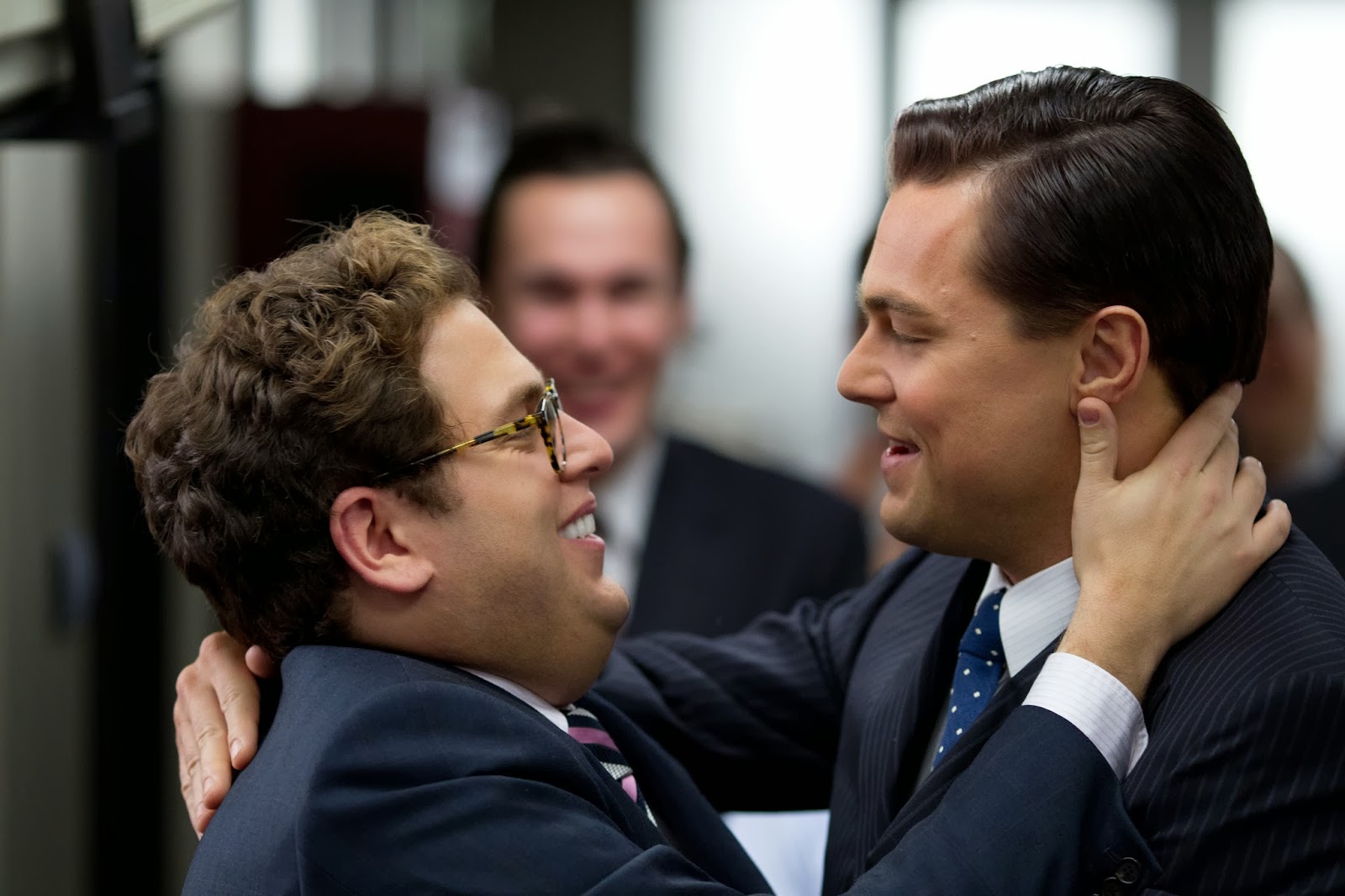
The Wolf of Wall Street

For F*** Magazine

THE WOLF OF WALL STREET

Director: Martin Scorsese
Cast:        Leonardo DiCaprio, Jonah Hill, Matthew McConaughey, Jean Dujardin, Jon Favreau, Kyle Chandler, Rob Reiner, Margot Robbie, Jake Hoffman, Shea Whigham, Jon Bernthal, Ethan Suplee, Kenneth Choi, P.J. Byrne, Christine Ebersole
Genre: Drama, Comedy
Run Time: 175 mins
Opens: 9 January 2014
Rating: R21 (Coarse Language, Sexual Scenes And Drug Use)


We all know the catchphrase popularised by Michael Douglas’ Machiavellein stockbroker character in 1987’s Wall Street, so say it with us: 1, 2, 3: “greed, for lack of a better word, is good”. Part of the controversy surrounding The Wolf of Wall Street is that the film not only makes greed look good, it makes it look like immense amounts of fun. Based on former stockbroker and convicted fraudster Jordan Belfort’s memoir of the same name, The Wolf of Wall Street takes viewers on a rocket ship ride into the stratosphere – but the interesting part is when the engines cut out and the vessel plummets down to the ground.


It is 1987 and Jordan Belfort (DiCaprio) becomes a Wall Street stockbroker, his boss Mark Hanna (McConaughey) teaching him that drugs and prostitutes are the only things that will keep him going. Belfort falls victim to the Black Monday crash, losing his position at the prestigious firm L.F. Rothschild. His wife Teresa (Milioti) finds him a job dealing in penny stocks in a dingy boiler room and being the gifted pitchman he is, Belfort soon earns a fortune. He befriends his neighbour Donnie Azoff (Hill) and they gather a band of misfits to found the Stratton Oakmont firm, which attracts the attention of the likes of Forbes magazine who dubs him “the Wolf of Wall Street”. It also attracts the attention of FBI agent Patrick Denham (Chandler). Belfort continues his extravagant existence, taking on blonde trophy wife Naomi (Robbie) as he dumps Teresa and getting addicted to cocaine and Quaaludes. As he must, the man who has everything realises it’s all slipping through his fingers. He does, right?

The wolf that Jordan Belfort (as depicted in the film) most resembles is the “insanity wolf” internet meme, the one all crazy-eyed, baring its fangs and favouring mutilation and immolation as solutions to all problems. Belfort is a wolf in wolf’s clothing: he’s already a wolf, but he’ll skin another wolf and wear the skin to prove how hard-core he is. Martin Scorsese has created what is essentially Contact High: the Movie, a film that is a wildly unmatchable thrill ride that also has something to say. The person this reviewer saw the film with described it as being the cinematic equivalent of getting drunk – complete with the hangover afterwards.


It is inevitable that a film of this sort will get called out for supposedly glorifying its subject. After all, this won’t be the first zeitgeist-y button-pusher of a movie to get misunderstood: how many guys went “hey dude, Tyler Durden’s so cool, I wanna be just like him”, “Patrick Bateman is the greatest!” or “that Travis Bickle has got it all figured out!”? This reviewer would argue that because The Wolf of Wall Street pulls no punches in its depiction of the sybaritic excesses Jordan Belfort wallows in, it doesn’t feel sanctimonious when the message of “the bigger they are, the harder they fall” eventually kicks in. There are times in the film when Belfort comes off as utterly pathetic, a noteworthy one being a scene in which he is almost paralyzed by a drug overdose and makes an agonising crawl out the door, down the stairs and to his car – it’s an inspired moment of physical tragicomedy which is almost Three Stooges-esque.


Between this and The Great Gatsby, Leonardo DiCaprio sure was partying it up in 2013. While both Jay Gatsby and Jordan Belfort are immensely wealthy, relatively young men who harbour a certain hollowness deep within, there’s no question that Belfort is more openly a maniac and boy, does Leo have the time of his life with this part. Yes, there are the lines and lines of coke, the gratuitous, wanton lovemaking, the white Ferrari “like Don Johnson’s in Miami Vice” and the pet chimpanzee.  But of course there’s the wounded, directionless, broken little boy at the very centre of it all who is drowning in the waves just like his luxury yacht caught in a storm - and you can bet that DiCaprio nails that in his portrayal of the character. Look out for a cameo from the real Belfort as the host of a seminar at the end of the film. Unfortunately for Leo, it seems Chiwetel Ejiofor is still the prime awards favourite at this point.


This being a Scorsese picture, it’s a given that the supporting cast comes out guns a-blazin’. Young Aussie actress Margot Robbie goes all Real Housewives, complete with a Brooklyn accent and a coiffed hairsprayed ‘do and pumps up the sex appeal yet manages to make Naomi more than a mere object in a turn reminiscent of Daryl Hannah’s in the afore-mentioned Wall Street. Who would’ve thought Jonah Hill, more Apatow’s type than Scorsese’s, would end up an Oscar nominee for Moneyball and star alongside Leonardo DiCaprio in this film? His turn as a panting, sycophantic lackey is comedy gold and it is to Hill’s credit that he’s also able to bring the sadness and shame in the part to the surface. Kyle Chandler’s FBI agent character is described as a “boy scout” and the strait-laced authority figure is a glimmer of order in the chaos that swirls around Jordan Belfort. Matthew McConaughey is in this for really just about two scenes, but he makes an impact as the guy who inducts Belfort into the wolves’ den. Jean Dujardin is also a hoot as a suave Swiss banker and money launderer.


The Wolf of Wall Street distinguishes itself from the awards contender pack by completely shedding any self-seriousness and being in-your-face irreverent. Scorsese pulls off that rare, glorious feat by crafting a film that’s wild and looks fast and loose, yet he knows where all the pieces are on the board every step of the way and juggles all those plates with impeccable precision. Sure, at 180 minutes, this is a long movie – but the time does zip by and then again, it fits the theme of excess (even though a good 20 minutes could have been cut without major consequence). It all adds up to an intriguing effect of subtly wearing the audience down after sending them corkscrewing into europhia, which seems to be exactly what Scorsese and company intended.

SUMMARY: While some might find it too rich for their blood, The Wolf of Wall Street is raucously funny, showcases Leonardo DiCaprio at his best and is entertaining without being inconsequential. This Wolf is on a bull run.

RATING: 4.5 out of 5 Stars

Jedd Jong

Hours

For F*** Magazine

HOURS

Director: Eric Heisserer
Cast:   Paul Walker, Genesis Rodriguez, Nick Gomez, Judd Lormand, Michelle Torres, Kerry Cahill, Shane Jacobsen
Genre: Thriller, Drama
Run Time: 97 mins
Opens: 9 January 2014
Rating: PG13 (Some Coarse Language)

It’s an often tragic fact of life that Mother Nature isn’t to be trifled with. Catastrophic disasters regularly rear their heads, wreaking unfathomable damage. Southeast Asia has just emerged from Typhoon Haiyan, which caused immense devastation in the Philippines in particular. In August of 2005, Hurricane Katrina struck Eastern North America; the most significant number of deaths occurring in New Orleans, Louisiana. The storm serves as the backdrop for writer/director Eric Heisserer’s survival thriller Hours.

Nolan Hayes (Walker) nervously waits in the hospital as his wife Abigail (Rodriguez) gives birth to their baby daughter, born five weeks premature. What should have been a joyous day turns into an ordeal for the new father as Hurricane Katrina sweeps into New Orleans, levee failures resulting in the flooding of the city. The power in the hospital cuts out and as it is evacuated, Nolan and the infant are left alone in the building. The only source of power for the neo-natal incubator needed to keep the baby alive? A malfunctioning generator which Nolan has to crank by hand every few minutes, desperately sustaining a fragile life.


Hours is Heisserer’s directorial debut, the screenwriter having co-written horror films A Nightmare on Elm Street (2010) and Final Destination 5. He has come up with a high-concept premise for an intimate one-man-against-the-odds story, combining elements of a ticking clock thriller with the “triumph of the human spirit” aspect of a survival film. Also at play is the “Papa Wolf” trope, that a man would do anything for the safety of his daughter. It’s almost like Taken, except that the daughter is hours old and that it’s Hurricane Katrina as the threat in place of a nefarious human trafficking ring. The thing is, the daughter can’t be fully developed as a character here since, well, she’s a new-born, leaving the character of the father to do all the dramatic heavy lifting.


Unfortunately, Heisserer is not entirely sure how to develop the premise and there are creaks evident in the story’s structure. Nolan’s fight to save his baby girl is interspersed with flashbacks that attempt to flesh out the relationship he shared with his wife before this incident, but they are heavily expository. The film does become something of a grind, falling into a pattern of “discover obstacle, overcome obstacle, go back to crank the generator, talk to the baby and deliver exposition”. We are also brought up to speed with real news footage spliced somewhat clumsily into the film. However, the last act of the film does get interesting and there is just enough for audiences to get invested in.


Hours is squarely Paul Walker’s film to carry, the late actor spending most of its running time as the only person on screen (apart from the infant). It is especially sobering to see the recently-deceased Walker in a film with themes of mortality and survival and he acquits himself relatively well. He is charming and watchable but sufficiently intense and exhausted when the film calls for it. Unfortunately, even though this is one of his best performances, one can’t help but feel that an actor of greater stature would fit the part better. Carrying a movie this emotionally and physically draining is no mean feat and Walker does visibly struggle at times.


Director of photography Jaron Presant lenses the film beautifully, emphasizing the eeriness of the deserted hospital with lots of low angles down long corridors and slow push-ins, contrasted with the warm lighting of the incubator room. Fans of Eight Below will be delighted at the introduction of a loveable German Shepherd late in the film, but beyond the dog, Nolan doesn’t get to interact with many other characters and Walker has to power through the occasionally-unwieldy script all by his lonesome. While Hours doesn’t quite gel, the simplicity of its narrative enhances the story’s emotional impact and Paul Walker does give it his all.

SUMMARY: Hours doesn’t fully deliver on a promising concept but has its moments of heartfelt earnestness and is a decent film to remember Paul Walker by.

RATING: 3 out of 5 Stars

Jedd Jong