Sunday, April 20, 2014

The Amazing Spider-Man 2 Interviews - Avi Arad and Matt Tolmach

For F*** Magazine

THE AMAZING SPIDER-MAN 2 INTERVIEWS
AVI ARAD AND MATT TOLMACH 


Andrew Garfield may be dressed in the red and blue Spidey suit and have the web-shooters affixed to his wrists, but producers Avi Arad and Matt Tolmach are the real web-spinners. 

By Jedd Jong 

The former CEO of Toy Biz-turned film producer, Arad was one of the founders of Marvel Studios and his filmography includes the first Spider-Man trilogy, the X-Men trilogy and the Blade trilogy. Tolmach stepped down as production chief at Columbia Pictures to launch his own production company and produce the new Spider-Man film series. These head honchos sat down to talk The Amazing Spider-Man 2 with F*** and other journalists, emphasising that they’ve got the fans in mind, talking about the Marvel Cinematic Universe which the Spidey films are ostensibly competing with, explaining Electro’s cosmetic overhaul and teasing some upcoming videogame-to-film adaptations Arad has in the works.

(Arad is wearing a t-shirt which shows Spider-Man arm wrestling Venom)

So, this is the teaser poster for The Sinister Six, it’s Venom right there arm wrestling!
Arad: A-ha, I gave it away! It’s not a secret anymore.

It’s Over the Top but with Spider-Man characters!
Arad: Yes.

How hard was it to craft The Amazing Spider-Man 2?
Tolmach:  Movies are hard to make, by the way. We were joking that it’s actually harder to make little movies in some ways because there’s so much goodwill around movies like this. Here we are in Singapore and last night, there were so many people that are rooting for these movies so you always feel that you have the wind at your back, but having said that, it’s an enormous undertaking and just physically, the process of making these movies is incredible and on the flip-side, people’s expectations for these movies are so enormous that really our job is to make sure that we’re telling the best story imaginable and doing it with the most talented people, whom we’ve been sitting with today, and making sure that all of that stuff is aligned so that we’re giving people something they really want.  It’s a big deal, we’ve been working on this movie for years…

Arad: Forever! We started 14 years ago. So for us it’s…

Tolmach: …That’s the truth. It’s all part of a larger…

Arad: He used to run the studio, and I used to take his money and make big movies, and now he’s taking their money and we make big movies.
Tolmach: He talked me into leaving.
Arad: I said “come on, you have to try it”. We were sitting at minus-something (degrees) outdoors…

Tolmach: That’s right, cut to a really, really awful location in Long Island and I think I looked at him and I was like “damn you!”

Arad: Rain and snow and “damn you” but we love it.

Tolmach: Oh no, it’s the greatest thing in the world.

Arad: Making a big movie is like a military operation. Like being on a battlefield. You have to improvise, deal with weather, deal with crowds…we had a night in which we applauded the extras because we were shooting it for summer, and it was 18 degrees, okay. Pretty cold – not Celsius, Fahrenheit. If I were an extra, I would go home. But they stuck it out, they stayed. They made a whole thing out of it, they were dancing and singing so they can take this.

Tolmach: People don’t realise, but when you watch a movie and see those people in the background, they have been standing there for like 12 hours – more.

Arad: The courage, but it’s all about Spider-Man. You want to be part of something like that because it’s cool, it’s good, it’s heroic, it’s a great role model and for me it’s the biggest character in the world so you can be part of history. It’s like “oh, that’s me over there!” and it’s a wonderful thing, it’s a folklore.

Tolmach: I think we take great comfort in the fact that – we don’t take it for granted, believe me – but we take great comfort in the fact that we’re telling a story about a guy who’s so beloved. I think as producers, the dangerous game is when you take on these enormous budgets and these enormous projects, you just don’t really know if the audience is going to care at all. We’re dealing with a character here who’s so beloved, there’s so much history that you just have a sense that you’re doing something that you really hope the audience cares about.


How do you strike a balance between giving the audience what they want and what you would like to do as producers?
Tolmach: It’s an important balance.

Arad: You know what, we actually think a lot about it and read the boards. Look at the costume in this movie. I mean people applaud this, it’s the best costume ever. The last movie, they told us it was the worst costume ever. (Laughs)

The “basketball suit”.
Tolmach: Alright, alright. (Laughs)

Arad: (These are) basic traits about an intellectual property like Spider-Man that have to be respected beyond anything else. So as long as the movie is about him and from that emanates the villain and the other issues, all in all, I have to say I think people really love what we do with our movies. Yeah, people’s nature is to criticise, it’s what they’re supposed to do I guess, but many of them criticise when they don’t know enough, so they’re nervous, it’s like “I hope they’re doing the right thing”. Our biggest pressure is not the 18 degrees, the snow and the rain, it’s to make sure that everybody’s going to walk away having something which is important to them. It’s important to make Gwen the smartest girl in school, charming and beautiful and strong, and helpful and active because women deserve that. Men love this kind of a girl today. In the 50s when comics were written, it was the Stone Age, but since then you ladies took over the world.

Tolmach: You did, we can see.

What do you think of the films that make up the Marvel Cinematic Universe, movies like the Captain America movies, the Thor movies, the Iron Man movies and The Avengers, made by Marvel Studios? How does this Spider-Man movie stand apart from the pack?
Arad: Let me tell you, the number one that we had to do when we started at Marvel was to establish the word “Marvel”. Many of the characters were known to people…by the way, people didn’t know much about Spider-Man, they knew we loved the character they didn’t know anything about it. So when we started at Marvel, the thing that made it for all of us is that today, when you go to Barnes and Noble and you buy a book and someone asks you “so, what did you get?” and you say “I got Harry Potter”, you don’t say “I bought a Barnes and Noble book.” Marvel today stands for great story, really good human value, so we want these movies to be very successful. When you walk into a movie house and you see the advertising, the word “Marvel” is part of the advertising, today it’s everybody’s story. In the old days, people say “it’s only for boys”, “it’s only for adults”, “nobody reads comics” – those days are over. Think of the kind of talent you met here and they all want to make our movies. When we started this journey, it was very hard to get great actors. We had to rely on the power of the studio and the power of the director, at the time it had to be someone people wanted to work for. Today, as long as we all make successful movies, this journey is never to stop.

Tolmach: There’s a great camaraderie, honestly, among those of us making these movies in Hollywood. There’s a sense that we’re all part of something…if someone makes a movie that doesn’t live up to fan expectations, it’s not good for any of us and we’re all part of something really special that everybody feels very grateful for. I was skiing this winter – I’m not going to tell you who this person is but it’s somebody who’s a big player in one of the Marvel, more than one of the Marvel movies – and I’d never met him. My wife knew his wife and they were talking and he was like “oh my god, I want to meet your husband because he makes the Spider-Man movies and I do this” and there was like this fraternity that we’re all part of.

Arad: Family.

Tolmach: That’s the real truth, that we’re all in this together. Spider-Man stands out, to answer your question, because in our minds what separates Spider-Man from all the other superheroes in the world is that he’s all of us. He’s an everyman, he’s a boy. He’s not rich and he’s not outwardly seemingly powerful, he’s just a kid who has to get a job and go to school and do all the things that we have to do. He’s struggling with the girl and the girl’s father, all the things that we’ve all dealt with and he’s also tasked with saving New York City against people like Electro and the Goblin and the Rhino.

Arad: He has tough principles, he cannot kill. So his job, because he’s always connected somehow to the villains who are themselves victims of circumstance, is very hard. It’s one thing to knock someone out, get into your car and drive away, but he wants to help these people and he has to stop them first. He’s the only superhero who’ll never break the covenant rule, he can never kill someone. So even as a role model, parents know that Spider-Man will do anything he can to stop, contain. When he doesn’t have a choice, and it’s innocent people (in the balance), not for himself, it’s for innocent people, then he’ll jump in. So we love this guy.

Tolmach: We do, he’s a big part of our lives.


How has filmmaking technology changed things in the last several years? When movies began, there was technology present from the first moments, and now, a lot of people say that movies are all about the technology.
Tolmach: Technology has made it possible to do things visually that we couldn’t do. Technology is great, we love technology. We fully embrace it and a lot of what you’re doing specifically in these kinds of movies has expanded, even if you’re looking at what we’ve done these 14 years.

Arad: A lot of people made it happen.

Tolmach: You couldn’t do Electro. We talked about Electro in 2000, you couldn’t do it. It required a level of sophistication technologically that now exists, and so the only thing you have to hold on to, the responsibility that we have, is to make it part of the storytelling. Technology for technology’s sake is a big “who cares”. In this case, Electro is a good example because it serves this character whom we love, who’s a really interesting, complicated character who goes from being utterly powerless and vulnerable to utterly powerful and invulnerable. So, the technology is part of that journey and we have to use it for great storytelling. That part of the moviemaking process has never changed.

Arad: You have to look at it as a commodity. Because one of my favourite superhero movies is still Dick Donner’s Superman.

Tolmach: Phenomenal!

Arad: The guy got an Academy Award, Colin Chilvers, for moving him on a wire, okay. That’s all it was. Today, we move people on wires in parks! Everywhere, it’s no big deal. But for us, it’s a joy to be able to make things real. You’ll see in this movie the way he flies, the way the wind does to his costume, this is mind-boggling.

Tolmach: You feel it.

Arad: And the 3D, you have to see it in 3D, because…wow. We actually made the first full 3D movie. We have the first six cameras to make a full 3D movie because it’s Spider-Man. The way he moves, the way the Goblin moves…this movie is born for technology. A lot of movies put in 3D became theatre-owners like it. This is a natural 3D action environment.

Are you worried about Marvel superhero movies possibly placing too much emphasis on the visuals? 
Tolmach: No. I mean, all these movies are different. What Avi said is true, and I’ll tell you personally, when I looked at our movie, and we looked at it every other day, and the movie begins and it says “Marvel”, I smile. Because that’s a brand that says to me something very special. It’s a fantasy, it represents something that I think all of us, whether you admit it or not, aspire to be in this world and be these characters. Spider-Man is a very different character and a different story and people are always going to go to Spider-Man movies to see Spider-Man. The Marvel movies, look, they’ve got great directors making those Marvel movies and I wouldn’t in any way put all of them in the same category. What Favreau was doing vs. what Joss Whedon was doing…they’re aesthetically different movies so I don’t think there’s one feeling for the whole universe. The Spider-Man thing is very unique. Spider-Man is very real.

Arad: In all fairness, the Marvel characters are very unique to themselves. We took great pains not to make the same character again. And therefore when you see Marvel movies, each one comes from a whole other point of view. Some of them will have great influence on us, some of them are just fun to watch. Without going into names, some of the movies are very successful. For a young man, I don’t know what it means, it means “that was fun”. But the politics is more appealing to the adults in the movie house. Spider-Man is the only one that was from day one, was always accessible to everybody. I have a grandson, he has no idea what I do, he’s too young. But all that he wants is Spider-Man clothes, and I look at my daughter and she (says) “I don’t know, he asked for it.” All the stickers and stuff, he’s full of Spider-Man stickers. I remember his (Tolmach’s) boy, very young, used to come to set and as a matter of fact gave me a heart attack. He climbed up the fence! He was very little, I don’t know 4…

Tolmach: He was like 3 or 4, yeah.

Arad: He was climbing up the fence, he was like “I’m Spider-Man!” Phenomena, they’re called “phenomena” because we don’t know what we really did. It will stand the test of time, they affect our lives, they’re graphically attractive, look at this guy (points to this writer). He’s a serious man, he has a Spider-Man (action figure) in his pocket! (Laughs) And today, it’s a mark of geek smarts, okay? When I was his age, if I had a Spider-Man comic book, I had to hide it or get into a fight!

Tolmach: That’s right.


Was there a particular reason why Electro out of all the Spider-Man villains was selected, and why the radical change in the character’s appearance?
Arad: It looks goofy! Can you imagine this goofy guy coming in…like Mardi Gras, exactly!

Tolmach: If you did that, this is what the whole interview would be like: “why did you do it like that?”
Arad: The whole fun with this thing is that we’re moving everything to the next generation. In our movies, Spider-Man has a cell phone. I can tell you if wanted to do cell phones eight years ago, people would say “there’s no way he can afford it.” Today, anybody, you cannot live without it. So we have to move with technology, with science, into the things that are familiar to all of us.

Tolmach: I think fans want us to interpret. You don’t want us really to just give you exactly what was in the comic book, you want us to interpret it in the spirit of the comic book but for it to look cool! I want my kid to want to wear an Electro costume, not to not want to. He’s wearing this one, he might not have worn the one in the comics. Electro’s about power. The metaphor with Spider-Man is all about power, what you do with it and what you don’t do with it and Electro is a character who’s about power and what you don’t do with it. He’s a perfect foil to Spider-Man…

Arad: Hard to fight. His power is such that unless you have his power (he’s undefeatable). So what we had fun with when we were working was how does he (Spider-Man) really stop him (Electro)? So first, again, I don’t want to tell you what will happen because there are fun surprises, but in order to fight Electro, you have to be Peter Parker, you have to be Gwen, because they’re both science geeks. So they have to work it out, if you have so much power, how do you counter it? The solution is really simple if you really listen to your physics teacher!

Tolmach: Most of us were like (makes snoring noises).


Avi, can you talk about some of the videogame movie adaptations you have in the works? Films like Mass Effect, Uncharted, Metal Gear Solid and inFAMOUS?
Tolmach: You want me to take that one? (Laughs)

Arad: He actually bought inFAMOUS when he (Tolmach) was head of the studio and Metal Gear is finally, finally happening. We have these contract stakes sometimes, four years for Metal Gear. Uncharted again we bought and it’s now, we have a great director and it’s all happening, it’s all coming together. He bought inFAMOUS like (snaps fingers) on the spot, in the elevator.

Tolmach: I’m a believer. That was easy, that was easy to see.

Arad: And the new game, it is out of this world.

Will we continue to see stinger scenes during or after the credits of the Spider-Man films?
Tolmach: We’ll only do it when it really matters. I promise you that, when it’s meaningful.


Wednesday, April 16, 2014

Iceman 3D (冰封: 重生之门)

For F*** Magazine

ICEMAN 3D (冰封: 重生之门)

Director: Law Wing Cheong
Cast:  Donnie Yen, Simon Yam, Eva Huang, Wang Baoqiang, Yu Kang, Hoi-Pang Lo, Mark Wu, Gregory Wong, Yang Jian-ping, Jacqueline Chong, Sukie Shek, Ava Liu
Genre: Action
Run Time: 105 mins
Opens: 17 April 2014
Rating: PG13 (Some Violence)

The 1989 film The Iceman Cometh gets thawed and re-heated with this goofy remake starring Donnie Yen. Yen plays He Ying, an Imperial Guard from the Ming Dynasty framed for treason, flash-frozen in an avalanche and re-awoken in 2013. He Ying wanders through modern-day Hong Kong, a world utterly alien to him. At a Halloween party, he meets May (Huang), who upon recovering from a drunken stupor offers him shelter and gradually begins to fall in love with the 400+ year old Imperial Guard. Meanwhile, Sao (Wang) and Niehu (Yu), blood brothers-turned enemies of He Ying who were frozen alongside him, have also been defrosted, proceeding to scour Hong Kong for He Ying. Police chief Yuanlong (Yam) is also hot on He Ying’s tail as a mysterious connection he shares with the Iceman comes to light.

Iceman has had a troubled production process, going over-budget and over-schedule and running into multiple issues with location shooting in Hong Kong. The resulting film was 3.5 hours long and has been split into two parts, with the sequel slated to arrive this October. This probably accounts for the inconclusive ending. Stuffed with over the top, juvenile gags, many bodily function-related, Iceman drowns itself in slapstick, making it difficult to enjoy as a fantasy action epic. After awaking from cryo-sleep, He Ying’s first action is pretty much unleashing a stream of turbo pee which splatters across the windshield of an arriving car. Even the Ghost Rider urinating fire was less of an indignity than this.


Yes, a movie about a Ming Dynasty guard getting unfrozen in 2013 isn’t going to be a beacon of logical storytelling, but Iceman strains the suspension of disbelief well past the breaking point. It’s remarkable how readily May and her pals accept the fact that He Ying is who he says he is, none of them particularly fazed or bewildered by the ancient palace guard just crashing at May’s place. May’s stereotypically camp friend is somehow able to show He Ying actual video of the very avalanche in which he was frozen, and it’s left completely unexplained as to where that footage comes from. Was there someone around filming it 400 years ago? This is but one of the many, many plot holes Iceman is riddled with. Its scattershot storytelling robs the narrative of any drive or stakes. There’s something involving a MacGuffin called the Golden Wheel of Time that is supposedly a time travel device, but there’s so much pratfall-heavy mucking about that the actual plot gets little attention. He Ying only actually meets Sao and Niehu in the present day at around the 50 minute mark.

Donnie Yen, we think you’re a great martial artist and we love seeing you kick ass onscreen, just please stop making such bad movies. Over the last year, the likes of Special I.D. and The Monkey King have been major embarrassments. To put it simply: Donnie Yen leaping through the air, striking an assailant as he lands = good. Donnie Yen drinking out of a toilet, remarking how the “well water is so salty and stinky” = bad. As the female lead, May’s purpose in the narrative is confusing. Huang Shengyi and Donnie Yen share little chemistry, and an inordinate amount of screen time is dedicated to the two characters “bonding” with little plot development actually taking place. There’s even a shamelessly mawkish subplot involving May’s mother, on the brink of being evicted from a nursing home. Wang Baoqiang, Yu Kang and Simon Yam make for forgettable antagonists when the plot thread that binds them and He Ying could have been the source of considerable dramatic tension.


The premise of Iceman has understandably been compared to that of a certain shield-packing Marvel superhero, but it’s really more like Demolition Man, only even sillier than that 1993 Stallone sci-fi flick. We saw the 2D version, but even then it’s easy to tell how utterly gimmicky the 3D version surely is – look out for pieces of curry chicken hurtling out from the screen! The climactic showdown set on the Tsing Ma Bridge is a halfway decent, if flashy and cheesy, action sequence, but it’s far from enough to make up for the preceding mess. There’s some pretty bad CGI, especially during a snowboarding sequence. Guys, xXx was 12 years ago. At the time of this writing, the sequel’s title translates to Iceman 2: Back to the Future. We’ll just roll our eyes now and get over with it.

SUMMARY: Heavy on sophomoric jokes and “stuff flying at the camera” gags but low on fantasy action spectacle and any storytelling coherence, we recommend tossing this Iceman back in deep freeze storage and throwing away the key.

RATING: 1.5 out of 5 Stars

Jedd Jong

Tuesday, April 15, 2014

Transcendence

For F*** Magazine

TRANSCENDENCE

Director: Wally Pfister
Cast:  Johnny Depp, Paul Bettany, Rebecca Hall, Kate Mara, Cillian Murphy, Morgan Freeman, Clifton Collins Jr., Josh Stewart, Cole Hauser, Cory Hardrict
Genre: Sci-Fi, Thriller
Run Time: 119 mins
Opens: 17 April 2014
Rating: PG (Some Violence)

In the Pirates of the Caribbean films, Johnny Depp asked “why is the rum gone?” and in Transcendence, he gets to ask “why is the RAM gone?” Depp plays Dr. Will Caster who, along with his wife Evelyn (Hall), is one of the foremost minds in artificial intelligence research. His work has earned the ire of a radical militant anti-technology activist group called RIFT; their operative fatally wounding him. Before Will’s death, he and Evelyn decide to upload Will’s consciousness to a supercomputer, something Will’s best friend Max (Bettany) warns against. As Will in his transcendent form becomes near-omnipotent, Will and Evelyn’s mentor Joseph Tagger (Freeman) works with FBI agent Donald Buchanan (Murphy) to contain and stop Will before he endangers his wife and the world at large.


Transcendence marks the directorial debut of Wally Pfister, winner of a Best Cinematography Oscar for Inception. Perhaps echoing the film’s themes of a wariness of technology in some small way, Pifster is an outspoken critic of shooting on digital format and insisted on shooting Transcendence on 35 mm film. Jack Paglen’s script earned a spot on the 2012 Black List of unproduced screenplays that had garnered the most positive industry buzz. Transcendence is reminiscent of 90s cyber-punk techno-thrillers, bearing shades of The Lawnmower Man, The Thirteenth Floor, eXistenZ, Johnny Mnemonic and The Matrix; also clearly influenced by the works of sci-fi authors William Gibson and Philip K. Dick, both famous for exploring the dynamic relationship between man and machine. Source Code is a recent genre entry that also comes to mind. There’s a bit of Rise of the Planet of the Apes vibe too, with the well-intentioned scientists playing god. While all the above-mentioned films had their outlandish moments (or were outlandish as a whole), Pfister takes great pains to maintain a po-faced plausibility and he is mostly successful.


Pfister’s style as a cinematographer is marked by a clinical precision which curiously didn’t sacrifice too much personality, and that is carried over to Transcendence. As far as directing debuts go, this is an assured first feature and hopefully a sign of great things to come from Pfister. The story has its predictable moments but it makes turns into surprising territory when it matters the most. At the mid-point of the story, Will and Evelyn buy over a dusty, dilapidated town, transforming it into a futuristic cradle of ground-breaking technology, enriching the lives of its residents akin to the forward-thinking pioneer who revolutionises a backward frontier town in a Western. The way in which Evelyn’s love for her husband clouds her judgement is presented compellingly, though there are perhaps one too many spots in which she goes “oh, now you’ve gone too far!” while the story continues apace.


Johnny Depp’s popularity has waned in recent years, moviegoers growing tired of his eccentric shtick and the big-budget bomb The Lone Ranger doing him no favours. You know an actor has played some weird roles when “human consciousness in a supercomputer” is considered relatively normal by his standards. Depp is on good form here, his Will Caster beginning as a loveable just-mad-enough scientist and then progressing into a non-corporeal force of technology without going “the full Skynet”. That’s not particularly easy to play and it is a better career move for Depp than running around with a dead bird on his head.

It might be Depp’s face on the poster (the one that looks like it hasn’t completely loaded) but this is as much Rebecca Hall’s film as it is his. While Evelyn’s characterisation does at times lean towards “female lead being defined by the male character”, she moves the plot forward as much as anyone else does and just like in Iron Man 3, Hall is believable as a scientist and effectively essays a woman struggling with some complex ethical conundrums. Freeman and Murphy’s characters fall squarely into the categories of “mentor figure” and “cop assigned to the case” respectively, but they are as competent as they typically are. Paul Bettany’s part is meatier, as he goes from being Will’s confidant and supporter to being possibly swayed by RIFT’s ideology. As the shady RIFT operative Bree, Kate Mara’s performance brings the likes of The East and The Company You Keep to mind. She’s not the greatest actress but she does lend a degree of sympathetic humanity to what could have been a generic band of bad guys.


Audiences flock to big-budget, spectacle-driven sci-fi blockbusters, but there’s definitely room in the market for techno-thrillers that are smaller in scale but also more thought-provoking, intelligent and carefully-crafted. There are parts of the film that are genuinely chills-inducing – suffice it to say that Cyber-Will doesn’t become a charming, affable Him. Transcendence falls short of brilliance, not digging as deep into its premise as it could have, but it is still engrossing, boasts a top-drawer cast and is satisfyingly cerebral if not mental gymnastics-inducing.

Summary: It’s not quite mind-blowing, but Transcendence is still a well-made, clever and entertaining post-cyber-punk thriller (and the least annoying Johnny Depp has been in a while). Jack in and boot up!


RATING: 4 out of 5 Stars

Jedd Jong

Wednesday, April 9, 2014

Sabotage

For F*** Magazine

SABOTAGE

Director: David Ayer
Cast:         Arnold Schwarzenegger, Sam Worthington, Mireille Enos, Olivia Williams, Joe Manganiello, Terrence Howard, Josh Holloway, Harold Perrineau, Max Martini, Gary Grubbs
Genre: Action, Thriller
Run Time: 109 mins
Opens: 10 April 2014
Rating: TBA

As per his oft-quoted promise, the Governator is back from politics and on the silver screen, in a film that promises to be tougher and grimier than either The Last Stand or Escape Plan. In this film based very loosely on Agatha Christie’s novel And Then There Were None, Schwarzenegger plays John “Breacher” Wharton, the grizzled leader of an elite DEA squad. The motley crew includes Monster (Worthington), Grinder (Manganiello), Sugar (Howard), Neck (Holloway) and Pyro (Martini) – nobody has an un-silly nickname, except perhaps Lizzy (Enos), who’s also Monster’s wife. After a bust goes awry, the team members are picked off one by one in gruesome fashion. FBI agents Caroline Brentwood (Williams) and Darius Jackson (Perrineau) are sent in to investigate, all signs pointing to the mastermind being someone in Breacher’s circle.


Action movie junkies have bemoaned the lack of truly great American action movies as of late, citing the homogenisation that results from every film having to be rated PG-13 to pull in the crowds, having less bite to them because of it. Sabotage pulls no punches when it comes to the violence – it seems like somebody was having a 2-for-1 sale on blood packs. The action is visceral and bereft of noticeable digital enhancement. But make no mistake: Sabotage is far from a “great American action movie”. Chaotic, mean-spirited, dumb and deafening, it pummels the audience into submission. Director David Ayer, who has carved a niche making gritty cop thrillers, gives Sabotage some of the documentary-like style he’s become known for, but the script that he co-wrote with Skip Woods is heavy on the insipid tough guy dialogue and light on wit and invention. This should be no surprise, seeing as Woods had a hand in penning the likes of X-Men Origins: Wolverine, A Good Day to Die Hard and Swordfish.


Watching the team in this film at work just really made this reviewer miss the guys who followed Dutch into the jungle in Predator. Practically everyone in Breacher’s squad is a jerk, chugging beers, hanging out at strip clubs - they’re just not really interesting, let alone endearing. It’s impossible to buy the group as a well-oiled machine who have been operating as a unit for some time, since they’re always at each other’s throats, and not in an amusingly dysfunctional way either. Now, of course it would be boring if everyone just got along, but if it seems like nobody has anyone else’s back, the audience is hard-pressed to give a damn when each team member starts biting it. As a result, this whodunit soon gets increasingly tiresome, instead of increasingly absorbing.


Schwarzenegger does make for a convincing team leader, worn, grizzled and serious. Thankfully, he doesn’t do a whole lot of referencing his status as a pop culture icon. It seems contemporary moviegoers regard Schwarzenegger as not much more than a punch-line, a fount of cheesy one-liners and a relic of the over-the-top 80s. It’s a bit of pity as his acting is not bad at all here.


The supporting cast isn’t remarkable but for what it’s worth, it’s cool that there are two Terminators on the same team (the other being Sam Worthington). Worthington has a reputation as a wooden, cookie-cutter action hero, but he’s competent as the only guy in the team with his head screwed on right. The distracting “ponytail beard” hanging from his chin does snatch a good deal of the credibility away, though. Mireille Enos spends most of the film being quite annoying, though it’s probably more the script’s fault than it is hers. She’s the lone girl on the crew has to constantly prove she can stand among the boys. How original and empowering. Olivia Williams fares only slightly better, her no-nonsense investigator being a character we’ve also seen a million times.


The film’s attempts at humour are cringe-worthy and oddly scatological. The team squirms as they wade through a sewer, and there are two random agents tasked with monitoring Breacher who have an extended conversation about peeing into a bottle. Yes, of course there are shootouts and car chases, and while the action scenes don’t feel overly staged, they also lack creativity and style, little more than flurries of bullet hits and gratuitous blood spatter (that poor cyclist on the windscreen). Pointlessly cruel instead of shocking or impactful, Sabotage has even less substance than your average spectacle-filled summer blockbuster, Schwarzenegger’s stoic turn its sole saving grace.

SUMMARY: We used to have at least a few brain cells. We watched Sabotage, and then there were none.

RATING: 2 out of 5 Stars

Jedd Jong

Wednesday, April 2, 2014

Noah

For F*** Magazine

NOAH

Director: Darren Aronofsky
Cast:         Russell Crowe, Jennifer Connelly, Ray Winstone, Logan Lerman, Emma Watson, Douglas Booth, Anthony Hopkins, Leo McHugh Carroll, Nick Nolte
Genre: Drama, Adventure
Run Time: 140 mins
Opens: 3 April 2014
Rating: NC-16 (Some mature content and violence)

“Survival at sea” movies seem to be making a comeback: over the last two years, we’ve seen Life of Pi and All is Lost, with Unbroken due later this year. Darren Aronofsky delivers his take on what might be the original survival at sea story with Noah. It has been ten generations since the creation of Adam and Eve, and Noah (Crowe) receives visions from God foretelling a great flood that will annihilate humankind, who has become wicked and violent. Noah is tasked with building an ark to shelter one male and one female of every animal during the flood. His wife Naameh (Connelly), sons Shem (Booth), Ham (Lerman) and Japheth (Carroll) and Shem’s wife Ila (Watson) help Noah with his divine mission, but they also witness the torment brewing within Noah. The vicious self-proclaimed king Tubal-Cain (Winstone) refuses to acknowledge the prophecy of the flood and leads his men against Noah. The fallen angels encased in rock known as the Watchers, led by Samyaza (Nolte), protect Noah and his family against the hordes as the waters erupt from the ground and fall from the heavens.


Most book-to-film adaptations are of full-length novels, and the first step in such adaptations is often trimming the material down to size and condensing it. The story of Noah is found in Chapters 6-9 of the book of Genesis in the Bible: it’s a short story that’s told matter-of-factly and this adaptation involves a good deal of expansion. Aronofsky set about making a film that would defy expectations associated with a Biblical movie, while staying true to the letter of the text – something definitely easier said than done. This is a filmmaker whose works include the provocative, disturbing likes of Requiem for a Dream and Black Swan and whose most technically ambitious film was the trippy The Fountain, so there’s no way he was going to play by established rules. Paramount got cold feet when test screenings last year generated controversy, but Aronofsky fought hard for the preservation of his cut of the film. The Noah audiences are getting stays true to Aronofsky’s vision, but it is easy to see why the studio panicked, and the multiple fades to black seem to indicate there’s still some re-editing that happened.


We don’t go to the movies to be preached to and Noah definitely isn’t a woefully laughable production the way Kirk Cameron’s Left Behind movies were. Aronofsky and co-writers Ari Handel and John Logan train the story’s focus on the humanity of the characters. The internal conflict that arises within Noah’s family and the external conflict provided by Tubal-Cain’s onslaught drive the narrative. All the players have their flaws, and oftentimes said flaws get magnified. The Bible is not a pretty book; many of the stories within are raw and hard to stomach. Aronofsky wanted to flesh out the darkness supposedly inherent in the story of Noah and the great flood, so the handling of the Watchers is particularly curious. In this film, they are fallen angels cursed to be imprisoned in stone, so they end up as rock creatures particularly reminiscent of Ray Harryhausen-style stop-motion movie monsters. In the Bible however, the Watchers lusted after human women, co-habiting with them and spawning the monstrous Nephilim; God bringing about the flood to wipe these giants from the earth. That Noah does not pursue this inherently juicy and fantastical story thread is puzzling.


There’s a lot of angst in this film, an understandable storytelling choice as angst breeds drama. Russell Crowe’s Noah is stoic but burdened with his divinely-appointed task, and as interpreted here, is intent that human beings not get a second chance. Russell Crowe certainly does “tough” and “angry” well; while this is a good performance, it’s not anything very new for him. Jennifer Connelly, who was also Crowe’s on-screen wife in A Beautiful Mind, is a dependable voice of reason as Naameh, who tries to reassure Noah that he loves his children and therefore cannot hate all of mankind.


Ila’s deal is that she is she is barren from a childhood injury and feels inadequate that she will not be able to provide Shem with children. Emma Watson attempts to give Ila a personality of her own, but it does seem like she’s defined by her role within the family. Logan Lerman’s Ham is the rebellious middle child, in danger of being swayed by the aggression and power Ray Winstone’s Tubal-Cain embodies. Winstone is as imposing and grizzled as he usually is and does make for a believable opponent to Noah, though he often falls into the position of “designated antagonist”. The slightest hint of levity in the film is provided by Anthony Hopkins’ Methuselah, Noah’s grandfather and a Yoda-type sage and mentor who misses the taste of berries.


Ideally, a film of this genre melds spectacle and intimate story-telling. It would seem that Noah accomplishes both, what with location filming in Iceland and on a purpose-built ark set at New York’s Planting Fields Arboretum, in addition to boasting the most complicated rendering in visual effects house ILM’s history. However, it sometimes feels like Aronofsky was reluctant to present a visual epic; that he was so intent on depicting a tense family drama that scenes like the masses of birds flocking into the ark were only included out of obligation. There is a time-lapse-heavy montage telling the creation story and illustrating man’s propensity towards conflict with several inventive touches. Perhaps it’s to do with the tonal approach: there’s a difference between “solemn” and “dreary” and most of the time, Noah leans towards the latter, resulting in a lack of sweeping majesty.


Darren Aronofsky wanted Noah to be “different”, and that it is. Filmgoers should appreciate the fact that a director as talented and as unique as Aronofsky was given around $130 million to tackle a story like Noah, rendering a well-worn story new again. It’s not necessarily going to sit well with the personal beliefs of every viewer out there but then again, that’s part of what sets this apart from the crop of Bible flicks – though it is at the expense of staying true to the source material. While the end result is far from watertight, it is interesting, it is sufficiently thought-provoking and taking a good deal of artistic license, the film explores the text as much as it challenges it.

SUMMARY: Far from the cuddly pleasure cruise drawn in so many children’s picture Bibles, Noah is complex, uneven, patchy but uniquely engrossing nonetheless.

RATING: 3 out of 5 Stars

Jedd Jong


Tuesday, April 1, 2014

The Best Offer (La Migliore Offerta)

For F*** Magazine

THE BEST OFFER (LA MIGLIORE OFFERTA)

Director: Giuseppe Tornatore
Cast: Geoffrey Rush, Jim Sturgess, Sylvia Hoeks, Donald Sutherland
Genre: Romance, Mystery
Run Time: 131 mins
Opens: 3 April 2014
Rating: M18 (Sexual Scene and Nudity)

The closest most of us hoi polloi will get to the thrill of an auction is outbidding some dude for second-hand electronics on eBay, so there’s an undeniable mystique and attraction to the glamourous upper-crust world of fine art and antique auctions. The Best Offer is a romantic mystery film set in that world, starring Geoffrey Rush as respected auction house owner Virgil Oldman. He’s hired by enigmatic young heiress Claire Ibbetson (Hoeks) to conduct an appraisal of the collection bequeathed to her by her late parents, and he becomes more and more preoccupied with the woman – who refuses to see him face to face - as the days go by. Adding to the mystery are odd gears and cogs scattered around Claire’s villa, which Virgil brings to gifted mechanic Robert (Sturgess) to piece together. The few who are close to Virgil, including his accomplice in acquiring a secret stash of master works, Billy Whistler (Sutherland), notice the usually immaculate man begin to fall apart, his life thrown into disarray by his obsession with Claire.

The Best Offer is a film of a most vexing sort, constantly on the brink of developing into something truly delicious yet refusing to take on a satisfying form at every turn. It is a particularly handsome movie to admire, cinematographer Fabio Zamarion casting a refined eye on various fancy European locales while the exact location in which most of the story takes place is left deliberately ambiguous. Living legend Ennio Morricone provides an expectedly seductive musical score as well. Writer-director Giuseppe Tornatore, of Cinema Paradiso fame, plants the seeds of a compelling mystery, but while he wants to root The Best Offer in highbrow territory, it often veers into slight luridness. It is almost as if the film is a step away from full-blown giallo hijinks, though this certainly wasn’t Torantore’s intention.


Virgil Oldman fits the archetype of a snooty, stuffy wealthy gent who is particular about his tastes, knowledgeable about his chosen field and who eats off plates and drinks out of champagne flutes monogrammed with his initials. Of course, he’s very lonely and inexperienced in the ways of romance. This reviewer found it difficult to get invested in Virgil’s relationship with Claire, whom Hoeks portrays as a fragile, troubled damsel, the self-imprisoned princess waiting for a knight to free her. There’s an element of leery voyeurism in Virgil trying to catch a glimpse of Claire, which makes his pursuit of this much younger woman all the more unsettling (note the unsubtle surname “Oldman”). Still, Rush is a commanding presence who gamely fleshes out the foibles written for his character.


Sturgess’ role is probably analogous to that of the geeky tech expert/comic relief in a conventional blockbuster, Robert helping to piece together the mechanical doodads Virgil discovers in Claire’s home. In addition, he coaches Virgil in the art of getting the girl, the young man becoming a mentor to the older one, and Sturgess is sufficiently charming. Donald Sutherland seems to have shot his part in his off-time from the Hunger Games films, still sporting President Snow’s mane and beard. As Billy Whistler, he’s meant to serve as a less cultured counterpoint to Virgil and to highlight Virgil’s dishonesty, seeing as Billy is there to help him “save” the best pieces for himself. Sutherland is well-cast in the part, even if it’s a relatively minor one.

The film’s dialogue is often laboured and verbose, lines like “everyone has moments where they prefer solitude to the multitudes” unnatural yet oddly poetic and not entirely out of place in the film’s milieu. Tornatore’s insistence on keeping the mystery inscrutable and denying the audience closure into which they can sink their teeth may make the film “arty”, but ultimately renders it less enjoyable than it could have been. We’re also going to gingerly roll out the “p word” that’s tossed around a lot when discussing films of this type – “pretentious”. To be clear, The Best Offer isn’t an annoyingly obnoxious affair and it’s a beautifully-made picture, but by wrapping its innate pulpy thriller aspects in layers of hoity-toity self-importance, it misses out on making the winning bid.


Summary: While elegant and initially beguiling, The Best Offer is also cold, stilted and not fully-formed. This reviewer is not quite sold.

RATING: 2.5 out of 5 Stars

Jedd Jong

Monday, March 31, 2014

Marvel-less: Top 10 Movies Marvel Would Rather We Forget

As published in Issue #51 of F*** Magazine


---
Text:

MARVEL-LESS
Top 10 movies Marvel would rather we forget
by Jedd Jong 16/3/14


Phase II of the Marvel Cinematic Universe is in full swing, with Captain America: The Winter Soldier in theatres now and Guardians of the Galaxy arriving in August. The rights to certain Marvel properties still reside with external studios: Spider-Man’s at Sony and Fox have X-Men and the Fantastic Four. There was a time before the cinematic House of M had a complete roof, and here F*** takes a look at some of the spottier entries on the Marvel movie track record, including made-for-TV movies and one that wasn’t even released. Prepare to cringe and thank the comic book movie gods that 2008’s Iron Man worked out as well as it did!

HOWARD THE DUCK
1986

A quirky, subversive creation of writer Steve Gerber and artist Val Mayerik, it’s safe to say that Howard the Duck is among the weirder Marvel characters, an anthropomorphic duck who provides social commentary and partakes in parodies of other comics. The Howard the Duck movie was a notorious failure, often considered one of the worst films ever made, and is also seen by many as George Lucas’ “start of darkness” years before the Star Wars prequels came along. Produced by Lucas and directed by Willard Huyck, who along with his wife Gloria Katz knew Lucas from film school, Howard the Duck was originally planned as an animated film, though it’s hard to say if it would have turned out better as one. The end result was baffling, alienating, disturbing, grotesque and nonsensical all at once, filled with upsetting sexual overtones between the title character and Beverly, a young aspiring singer played by Back to the Future’s Lea Thompson. Imagine how many parents were aghast, thinking it would be a great idea to bring their kids to see the latest movie “from the creator of Star Wars”. As Steven Tyler once said, “Well, hellfire, save matches, f*** a duck and see what hatches!”

CAPTAIN AMERICA
1979

Everyone knows the Incredible Hulk TV series starring Lou Ferrigno and Bill Bixby, but around the same time, Marvel attempted to launch TV shows starring some of its other heroes to not quite as much (okay, very little) success. 1979’s Captain America starred cult movie actor Reb Brown (remember Yor, The Hunter from the Future?) in the title role and was one of those “in-name-only” adaptations. Here, Steve Rogers wasn’t a World War II hero defrosted from an icy slumber, but a former Marine caught in a road accident. He was then injected with a super-serum created by his late father, who was a patriotic WWII-era government agent nicknamed “Captain America”. Behold the motorcycle helmet, semi-transparent shield and that hilarious bike! There were also no characters from the comics in the film besides Cap himself. This was followed up with a sequel the same year, entitled Captain America II: Death Too Soon. Reb Brown shared this anecdote from the set: “I came out of my motor home and I was in full Captain America regalia, had my shield and everything. There was a drunk sitting on the wall He looks up at me, falls off the wall and says 'I gotta stop drinking!’ He climbs back up on the wall, sees that I'm real, and says 'well, maybe not.'" You might need some of the hard stuff to sit through this one, that’s for sure.

CAPTAIN AMERICA
1990

Before Chris Evans became the star-spangled man, there was yet another attempt at bringing Captain America to the movies in the form of this schlocky, low-budget flick directed by B-movie veteran Albert Pyun. Donning the red white and blue was Matt Salinger, son of Catcher in the Rye author J. D. Salinger. The Red Skull became a fascist Italian operative instead of a Nazi one, and was apparently behind the assassination of Martin Luther King, Jr., JFK and Bobby Kennedy. In an interview with GQ Magazine, Salinger revealed “in my costume they gave me these ears—they weren't my real ears—they just had this plastic that was part of the costume, these rubber ears. And there were some shots where they just looked so bad. Really kind of cheesy.” He has been very good-natured about his participation in this unfortunate flick, saying “am I bitter? Not at all; it was fun and not that many people get to play a superhero.” The show was arguably stolen by that spy who comes in to congratulate government scientists on their success with the super soldier project, only to abruptly pull a pistol, yell “HEIL HITLER!” and shoot the guy. It’s that kind of movie.

THE PUNISHER
1989

Frank Castle is probably the anti-hero most comic book readers think of when they hear the term “anti-hero”. Succinctly described as “Batman if he didn’t have that hang-up about using guns”, the Punisher has appeared in three films so far, this one being the first. Dolph “I must break you” Lundgren, fresh off playing He-Man in the Masters of the Universe film, played Frank Castle – sans iconic skull logo. Co-writer Boaz Yakin fought hard for the preservation of that aspect, but it was deemed “too comic book-y”, this omission one of several areas in which this take on the Punisher strayed too far from the source material. He also lived in the sewer. However, taken on its own, it’s a half-decent vigilante thriller and works great as something to pop into the DVD player when you’re feeling nostalgic for cheesy late-80s action mayhem. There are entertaining stereotypical villains too, with Jeroen Krabbé as a Mafia kingpin and Kim Miyori as a Yakuza dragon lady. The Punisher also features one of the best Lundgren one-liners outside of that Rocky IV line: Frank’s ex-partner Lt. Berkowitz (Louis Gossett, Jr.) asks Frank “what the f*** do you call 125 murders in five years!?" to which he replies “work in progress.”

PUNISHER: WAR ZONE
2008

Following the mildly successful 2004 Punisher film starring Thomas Jane, it was decided that instead of a sequel, a reboot would be released, produced under the “Marvel Knights” banner. Ray Stevenson replaced Thomas Jane in the skull-emblazoned fatigues, and Dominic West played the supervillain Jigsaw. Released in December, it was a critical and commercial failure, but the story behind its making does earn Punisher: War Zone a second look, and the likes of comedian/actor Patton Oswalt have become vocal proponents of the film. It’s messy, violent, intense and theatrical; the late Roger Ebert deemed it well-made but “disgusting”. Director Lexi Alexander wanted to prove that female directors could take on big action flicks too and as a former World Point Fighting and Karate champion who played Kitana in the Mortal Kombat: Live Tour arena show, she’s one tough cookie. Her first short film was also an Oscar-nominated one. Turns out the director is probably more interesting than the Punisher: War Zone film itself. Ray Stevenson has also been a good sport about it, parodying his role by voicing the Punisher in kids’ cartoon The Super Hero Squad Show, in which the Punisher likens crime to Brussels sprouts on a plate of mac and cheese.

NICK FURY: AGENT OF S.H.I.E.L.D.
1998

In the current Marvel Cinematic Universe, pop cultural icon and all-around badass Samuel L. Jackson dons the eye patch as the head honcho of clandestine organisation S.H.I.E.L.D. Before him though, none other than the Hoff played Nick Fury in a television movie on Fox, based on the Earth-616 incarnation of Fury before the Ultimates one (modelled on Jackson himself) came along. In this 90s cheese-fest, retired super-agent Fury is called back into action when terrorist organisation HYDRA rears its head (or heads, rather), with La Contessa Valentina Allegra de la Fontaine (Lisa Rinna) and Madame Hydra (Sandra Hess) as the main threats. This travesty was written by David S. Goyer, who - *gulp* - seems to be in charge of shaping the DC cinematic universe, having written Man of Steel. Not content with chomping cigars and chewing scenery, David Hasselhoff, who let’s face it is no more than a pop culture punchline at this point, came forward to say he thinks he’s still a better Fury than Sam Jackson. "Stan Lee came on the set and told me all about Nick. He said 'You're the ultimate Nick Fury'. He gave me the greatest compliment ever,” Hasselhoff bragged. "I was hoping to have played him in the movie. And then Samuel L. Jackson came in and he was a great Nick Fury but he wasn't really the consummate Nick Fury, the way he was written. And I think that's a shame because he's a great character and a funny character… I'm hoping to do it again sometime,” he continued, blaming “whoever directed (The Avengers)”. Dream on, Mitch.

MAN-THING
2005

Now, stop snickering kids; we’ve all heard the “Giant-Size Man-Thing” jokes before. The character of Dr. Ted Sallis was a biochemist transformed by a mixture mystical swamp-dwelling forces and an attempted recreation of the Super Soldier serum into the mossy monster. Man-Thing’s first appearance in the May 1971 issue of Savage Tales predates DC’s similar creation Swamp Thing by two months, but a Swamp Thing movie was released in 1982 (directed by horror meister Wes Craven) while Man-Thing had to wait until 2005. The telefilm changed Ted Sallis from a scientist to a Native American Shaman, also excluding the character’s connections to A.I.M. (recently featured in Iron Man 3) and the super-soldier serum, instead opting for a more straightforward, schlocky creature feature approach. It was intended as a video release, then planned as a theatrical release during the 2004 Halloween season but bumped back to debuting on video and the Sci Fi Channel. Legend has it that half the audience up and left during a test screening of this film. Director Brett Leonard attempted to insert some shout-outs to comic book creators Steve Gerber, Mike Ploog and Val Mayerik with characters named after them (the last played by Leonard himself), but it was probably cold, wet, slimy comfort to any fans of the Man-Thing comics.

THE TRIAL OF THE INCREDIBLE HULK
1989

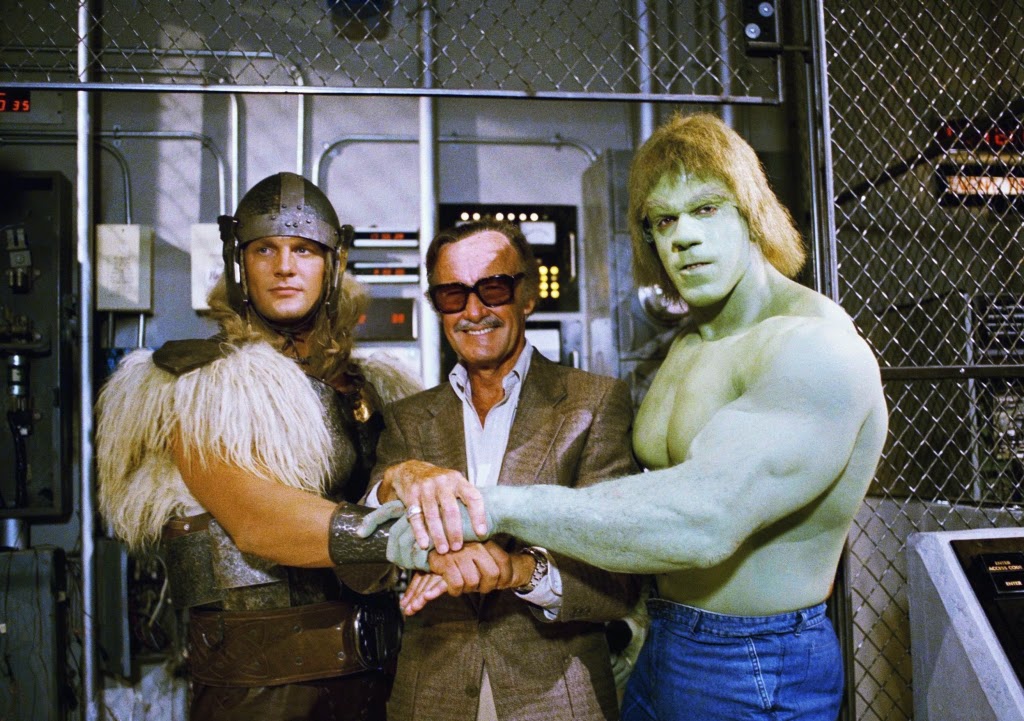
We’ve mentioned the 1978 Incredible Hulk television show, and after it concluded, there were three made-for-TV films produced to keep the Hulk name smashing on: The Incredible Hulk Returns (which is where that picture of Stan Lee, Hulk and Thor at the top of this article comes from), The Trial of the Incredible Hulk and The Death of the Incredible Hulk. The Incredible Hulk Returns was intended as a backdoor pilot for a Thor TV series, set to star Eric Kramer in the title role. Likewise, The Trial of the Incredible Hulk was to have launched a TV series for Marvel’s resident lawyer/vigilante, Daredevil. Neither of those shows materialised. Matt Murdock/Daredevil was played by Rex Smith, with his arch-nemesis Kingpin (sporting beard and hair unlike his comics counterpart and referred to only as “Wilson Fisk”) played by John-Rhys Davies. Daredevil’s appearance was intentionally quite different from that in the comics: an all-black, not red, suit, no devil horns on the cowl and an absence of the Double-D insignia on his chest. Spoiler alert: the “trial” of the title only takes place in a dream sequence, as “trial” is supposed to have a double meaning – like in “trials and tribulations”. A pretty disappointing, supposedly clever move. This is also noteworthy as the first Marvel movie in which Stan Lee made a cameo appearance, as the jury foreman in the Hulk’s “trial”.


GHOST RIDER: SPIRIT OF VENGEANCE
2012

Lifelong comic book fan Nicolas Cage (the “Cage” in his stage name is taken from Marvel Comics character Luke Cage) leapt at the chance to play Johnny Blaze/Ghost Rider in the 2006 film. While campy and forgettable, it’s far from as hated as the fiery bike wreck of a sequel, Ghost Rider: Spirit of Vengeance. Cage was the only returning cast member, with Mark Neveldine and Brain Taylor of Crank infamy taking on directorial duty. Set eight years after the events of the first movie, Spirit of Vengeance sees Johnny Blaze playing guardian angel to a young boy hunted by the demon Roarke (Ciarán Hinds). While promoting the film, Cage promised “moments that are for lack of a better word: freaky. You are going to be like, ‘Did I just see that happen?’ Hopefully it will mess with your mind, which is what I’m excited about.” Scenes like the Ghost Rider urinating a stream of fire and Cage exclaiming “he’s scraping at the door, scrapin’ at the doooaah!!” In our review of the film, we gave it 0.5 out of 5 stars, not even Idris Elba in a supporting role as a French monk could salvage this.

Said our writer, “It's not often that writing a movie review feels like rendering a public service, but in this case, we feel like superheroes saving humanity from evil when we state this warning: do not watch this movie.”

"Personally, I'm done," Cage said when asked if he would return to the role. Like Johnny probably felt after peeing fire, we can say we’re relieved.

THE FANTASTIC FOUR
1994

The 2005 Fantastic Four film and its 2007 sequel, both directed by Tim Story, are fluffy throwaway flicks, if not awful ones, and are often dismissed. But the Fantastic Four movie that has stayed in the collective geek consciousness is the one that wasn’t even released. Produced by Z-movie king Roger Corman and directed by music video director Oley Sassone, this curiosity exists just so production company Constantin Film could cling to the movie rights for the Fantastic Four property, as they were due to revert to Marvel soon. Stan Lee claimed that “the movie was never supposed to be shown to anybody." Co-producer Bernd Eichinger has long disputed Lee’s claims. What we know is that this was a movie that was essentially a “watch this space” notice, hastily slapped together and boasting special effects that would be dated in 1964, let alone 30 years later, Johnny Storm in flame-on mode essentially a cartoon. The bootleg has been a comic convention staple and has made its rounds on the internet. Filmmaker Marty Langford’s exposé documentary Doomed! The Untold Story of Roger Corman's The Fantastic Four is due out later this year. We’re honestly more excited for that than for the actual remake.